





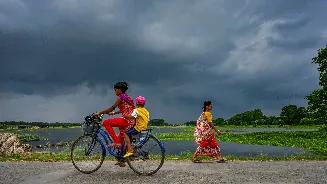

What is Monsoon Withdrawal?
The monsoon doesn't just stop; it retreats. This withdrawal is a gradual process that typically begins in the first half of September from the northwestern parts of India and proceeds southeastward over several weeks. The India Meteorological Department
(IMD) officially declares the withdrawal based on specific criteria, including a continuous five-day period without rain, a significant drop in moisture, and the establishment of an anti-cyclone over the region. This slow, phased pullback is very different from the sudden, dramatic arrival of the monsoon and sets the stage for a major shift in our weather patterns.
Clearer Skies, Stronger Sun
The most immediate cause of the post-monsoon heat is the disappearance of clouds. During the peak monsoon months, a thick cloud cover acts like a giant sunshade, reflecting a significant amount of solar radiation back into space and keeping daytime temperatures in check. As the monsoon system weakens and retreats, the skies clear up. This allows the sun's rays to beat down on the land with uninterrupted intensity. Even though the sun's angle is lower than in June, the direct exposure is enough to cause a sharp rise in surface temperatures.
The Role of Anti-Cyclonic Circulation
A more complex, invisible force is also at play: a change in atmospheric circulation. As the monsoon trough weakens, a high-pressure system, known as an anti-cyclone, establishes itself in the lower atmosphere over the withdrawing region. Unlike low-pressure systems that draw air up to form clouds and rain, high-pressure systems cause air to sink. This sinking air compresses and warms up, further increasing temperatures on the ground. This phenomenon, called subsidence, also suppresses the formation of new clouds, reinforcing the cycle of clear skies and intense heat.
Lingering Humidity Adds to Discomfort
The heat alone is only half the story. The ground is still saturated with moisture from months of rain. As the sun heats this moist land, a large amount of water evaporates into the atmosphere, leading to high humidity. This combination of high temperature and high humidity is what makes the weather feel so oppressive and sticky. The humidity prevents sweat from evaporating efficiently, which is our body's natural cooling mechanism, making the 'feels like' temperature much higher than the actual air temperature.
The 2026 Outlook
According to the IMD, September 2026 is forecast to be drier and hotter than usual for many parts of the country. Rainfall for the month is expected to be below normal, which could intensify the September heat phenomenon. An on-time withdrawal of the monsoon is expected around September 17. This, combined with prevailing strong El Niño conditions which are often linked to weaker monsoons in India, suggests that the discomfort from the heat may be more pronounced this year. While some eastern parts of the country might still see rainfall, most of central and northern India should brace for a warm and dry transition period.