






A New Space Age for India
The year 2020 marked a monumental shift in India's space policy. The government officially opened the sector to private participation, creating a framework to move from a government-led model to a thriving public-private ecosystem. Central to this reform
is the Indian National Space Promotion and Authorisation Centre (IN-SPACe), established as a single-window agency to promote, authorise, and supervise the activities of non-governmental entities (NGEs). This move is designed to let the Indian Space Research Organisation (ISRO) focus on advanced research and deep-space missions, while private players handle more routine tasks like building and launching satellites. With policies like liberalised Foreign Direct Investment (FDI) and dedicated venture capital funds, the government is signalling that India is open for space business.
The Trailblazers: Meet the Startups
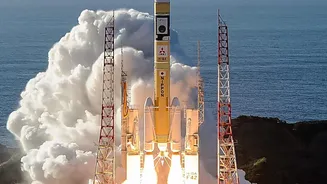
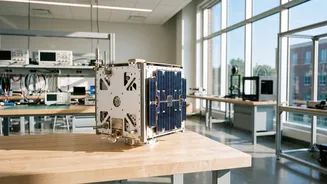
A new constellation of Indian startups is rising to the challenge, with over 400 now active in the sector. Two names have prominently emerged in the launch vehicle space: Skyroot Aerospace and Agnikul Cosmos. Hyderabad-based Skyroot Aerospace made history by becoming the first Indian private company to reach orbit with its Vikram-1 rocket. The company, which is now a space-tech unicorn, aims to serve a global clientele with its family of launchers. Meanwhile, Chennai's Agnikul Cosmos, based at IIT Madras, has developed the world's first single-piece 3D-printed rocket engine, the Agnilet. This innovation drastically cuts production time and complexity. Other key players include Dhruva Space, which builds satellite solutions, and Pixxel, which is developing a constellation of hyperspectral imaging satellites.
The Multi-Billion Dollar Opportunity
The primary advantage of this privatisation push is economic. Private companies, driven by a profit motive, are expected to significantly reduce the cost of satellite launches and space missions. This new competition and efficiency could transform India's space economy, which is currently valued at around $8-9 billion. Projections suggest this figure could skyrocket to between $40 billion and $45 billion by the next decade. This growth isn't just about launching rockets; it's about creating a robust domestic industry that encourages 'Make In India' principles, fosters high-skilled job creation, and integrates Indian companies into global space value chains.
Beyond the Launchpad: A Downstream Economy
Cheaper and more frequent access to space unlocks a vast downstream economy. The commercialisation of space applications can directly benefit sectors like agriculture, disaster management, urban planning, and communications. Companies like Pixxel are already building satellites to provide crucial Earth observation data to clients. This data can be used for everything from monitoring crop health to tracking urban expansion. Furthermore, a mature private space sector opens the door to future industries, including satellite servicing, space debris management, and even long-term ambitions like space tourism and resource exploration.
Navigating the Final Frontier's Challenges
The path to a thriving commercial space sector is not without its obstacles. Indian startups face stiff competition from established global players like SpaceX and Rocket Lab. Access to funding remains a significant hurdle; while investment is growing, it is still a fraction of what is seen in the US space market. There is also a need for more comprehensive legislation to cover complex issues like liability and insurance for space activities. Building a talent pipeline with specialised skills in areas like propulsion and avionics is another critical challenge that must be addressed to ensure sustainable growth.