





An Unspoken Monsoon Ritual
It’s a Pavlovian response deeply embedded in the Indian psyche. The smell of petrichor—that earthy scent of rain on dry soil—is inextricably linked to the smoky aroma of corn being roasted over hot coals. While other snacks have their moments, the bhutta,
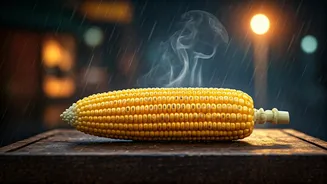
or corn on the cob, reigns supreme as the official snack of the monsoon. It’s a simple, rustic pleasure that transcends age, class, and region. The craving isn’t just for the taste; it's for the entire experience. It’s the ritual of pulling over on a wet highway, huddling under a makeshift tarpaulin roof, and watching the vendor expertly prepare your order while rain drums down around you. This humble ear of corn becomes a vessel for comfort, warmth, and nostalgia.
The Theatre of the Bhuttawala
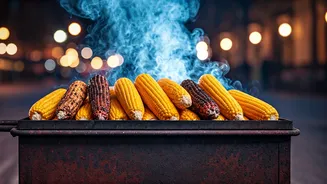
The magic of the bhutta begins long before it reaches your hands. It’s a performance staged by the bhuttawala, the street-side vendor who has mastered this culinary art form. Armed with a small charcoal grill (a sigdi), a hand-fan, and a collection of spices, they are the unsung heroes of our rainy-day joy. They carefully select an ear of corn, strip back its husk to use as a handle, and place it on the glowing embers. The real skill lies in the constant turning and fanning, a delicate dance to ensure each kernel is perfectly charred but not burnt. The air fills with the pop and crackle of cooking corn and the intoxicating scent of smoke. This is not fast food; it is a craft that requires patience and an intuitive understanding of fire and food, turning a simple vegetable into a masterpiece of street cuisine.
A Symphony of Simple Flavours
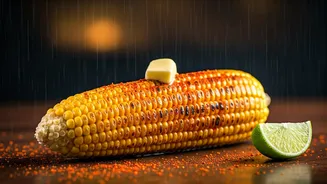
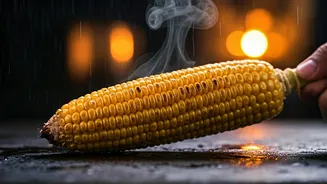
Once the corn is roasted to perfection, with a beautiful mosaic of golden, white, and blackened kernels, the final act begins. The vendor takes half a lime, dips it into a potent mixture of salt, red chilli powder, and sometimes a hint of chaat masala or black salt, and vigorously rubs it all over the hot cob. The sizzle as the acidic lime juice hits the warm kernels is a sound that promises an explosion of flavour. The result is a multi-sensory delight. The initial sweetness of the corn is immediately countered by the tangy lime, the sharp saltiness, and a lingering kick from the chilli. Every bite is a perfect balance of textures—the slight crunch of the charred bits, the tenderness of the kernels, and the warmth that spreads through you, chasing away the monsoon chill.
More Than a Snack, It's a Memory
Why does this simple snack hold such a powerful emotional grip? Because a bhutta is rarely just about the food. It's about shared moments and cherished memories. It’s the long drives with family where a bhutta stop was mandatory. It’s the impromptu post-college snack with friends, getting drenched while arguing over the last bite. It’s the childhood memory of your parents buying you a cob, carefully wiping the masala from your face. Eating a bhutta is a communal act, a moment of pause in our busy lives to connect with the season and with each other. It represents a simple, unadorned joy that feels increasingly rare in our complex world. Each bite is a taste of nostalgia, a reminder of simpler times and the enduring beauty of the Indian monsoon.
A Healthier Indulgence
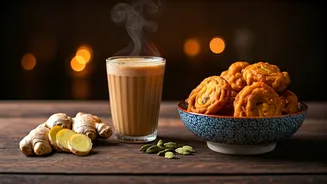
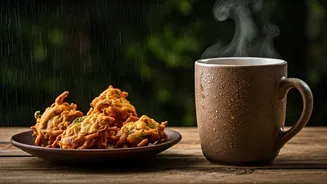
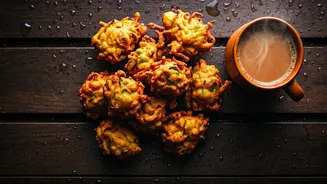
In a world of deep-fried samosas and pakoras, the roasted bhutta stands out as a relatively healthier rainy-day indulgence. Corn is a whole grain, rich in dietary fibre, which aids digestion and helps you feel full. It also provides essential minerals and B vitamins. When roasted, it retains most of its nutritional value, unlike deep-frying which adds significant calories and unhealthy fats. The minimal processing and simple, natural seasonings make it a clean street food option. So, the next time you feel a pang of guilt for indulging your monsoon cravings, remember that choosing a bhutta is one of the smarter, more wholesome ways to satisfy that desire for something hot, savoury, and deeply satisfying.