






From roadside stalls to office canteens, packaged water is everywhere. But is the water you're buying truly safe? India's food regulator, FSSAI, has a framework of standards designed to protect consumers, but being informed is your best defence.
Packaged Water vs. Mineral Water
Most people
use the terms 'packaged water' and 'mineral water' interchangeably, but legally, they are two different products in India. 'Packaged Drinking Water' can come from any potable source, like municipal supply or borewells. It is then treated through processes like reverse osmosis (RO), UV sterilisation, and ozonation to make it safe for consumption. 'Natural Mineral Water', on the other hand, must come from a protected underground source and is bottled at that source. Its processing is limited to preserve its natural mineral composition. The rules are different for each, governed by separate standards: IS 14543 for packaged drinking water and IS 13428 for natural mineral water. Many brands may highlight the word 'mineral' on the front, but the fine print on the back will clarify if it's 'packaged drinking water'.
What the Law Demands
To sell packaged water, manufacturers must have a license from the Food Safety and Standards Authority of India (FSSAI). Since November 2024, FSSAI has classified packaged water as a 'high-risk' food category, which means manufacturers face stricter oversight, including pre-licensing and annual inspections. As of January 1, 2026, a new mandatory 'Scheme of Testing' came into effect. This requires manufacturers to conduct regular tests for microbiological and chemical contaminants at FSSAI-notified, NABL-accredited labs and maintain these records for at least five years. While the mandatory Bureau of Indian Standards (BIS) ISI mark was a key trust signal for years, this national requirement was removed in October 2024 and replaced by FSSAI's more stringent testing and audit system. However, some states, like Uttar Pradesh, have recently made BIS certification a mandatory condition again for obtaining a state food licence.
Your Checklist Before You Buy
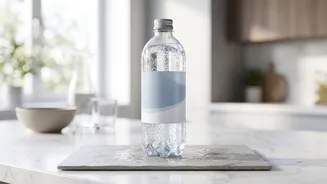
Being an alert consumer is the most effective way to avoid unsafe or counterfeit water. Before you purchase a bottle, take a few seconds to inspect it. Look for the FSSAI logo and the 14-digit license number, which can be verified on the FSSAI website. Check that the bottle's seal is intact and the tamper-proof ring has not been broken. The label should be clearly printed, not smudged, and must display the manufacturer's name and address, a batch number, the manufacturing date, and the 'best before' date. For single-use plastic bottles, look for the 'CRUSH THE BOTTLE AFTER USE' or 'DISPOSE THE BOTTLE RESPONSIBLY' message. Be wary of lookalike brand names that are just one or two letters off from a well-known brand, a common tactic used by counterfeiters.
Signs of a Fake and What to Do
Counterfeit water is a serious problem, with sellers often refilling used bottles with untreated water and selling them with fake labels and seals. Besides checking the label and seal, examine the bottle itself. Scratches, dirty packaging, or a mismatched cap can be red flags. The water should be clear, with no strange smell or taste. An unusually low price, especially for what is being sold as 'natural mineral water', should also make you suspicious. If you suspect a bottle is unsafe or counterfeit, you can report it. Try to keep the unopened bottle and its cap, and take photos of the label, FSSAI number, and batch details. Complaints can be lodged through FSSAI's 'Food Safety Connect' app or by contacting your district's Food Safety Officer.
Enforcement in Action
FSSAI has recently increased its surveillance of the packaged water industry. In a drive during late 2026, the regulator collected samples from all major brands across the country for lab testing. This enforcement action followed the discovery of contaminants like bromate and polynuclear aromatic hydrocarbons (PAHs) in a sample from a leading brand, which led to FSSAI sanctioning prosecution against the company. These drives aim to ensure that the water reaching consumers complies with the strict limits set for harmful chemicals. The regulator is also cracking down on companies using misleading labels or names that mimic established brands to fool consumers.