


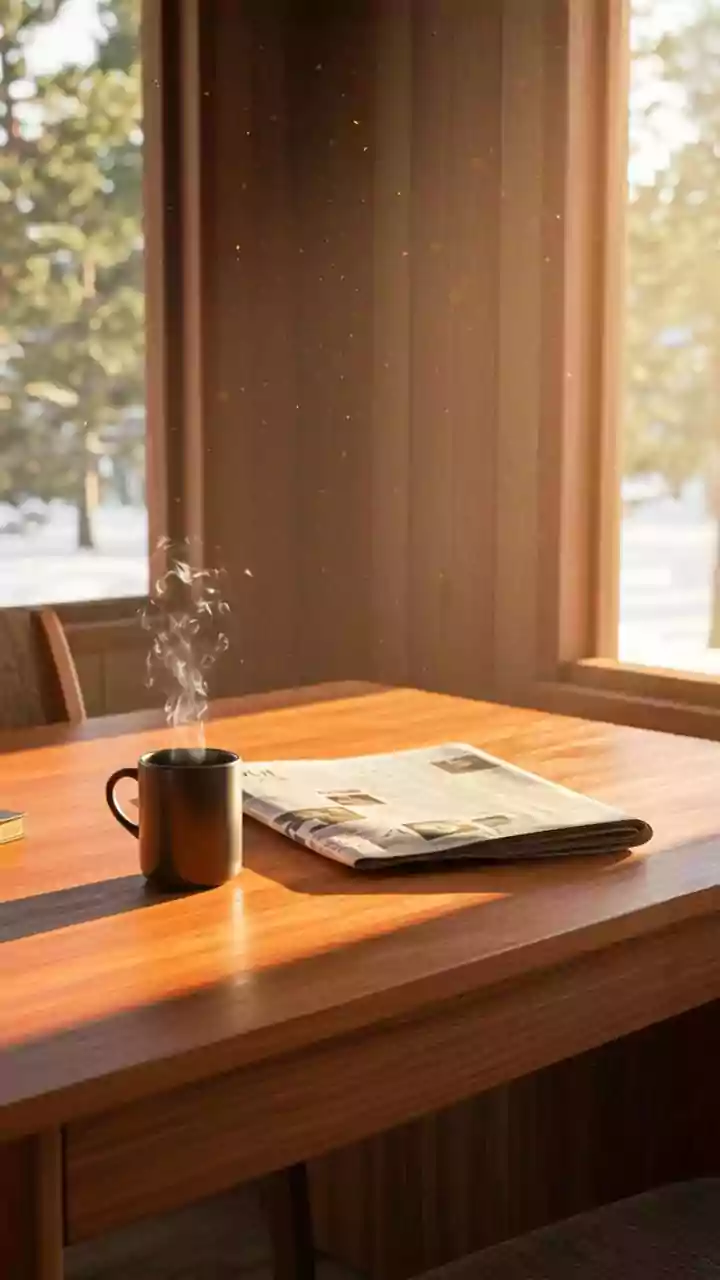

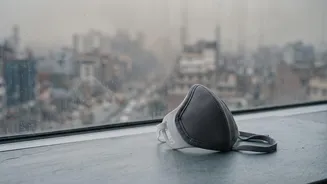

It’s a familiar winter scene: you’ve just finished cooking, but a hazy smog hangs in the air, refusing to clear. It’s not your imagination. There are scientific reasons why cooking smoke gets trapped in your kitchen during colder months.
The Physics of a Winter Kitchen
The primary reason
smoke seems to get trapped is a simple principle of physics. Hot air is less dense and naturally rises. In summer, this helps cooking fumes vent out of an open window. However, winter air is cold and dense. This creates a high-pressure zone outside your home that acts like an invisible lid. The warmer, lighter air inside your kitchen struggles to push through this heavy blanket of cold air, a phenomenon related to what meteorologists call a temperature inversion. Because homes are sealed more tightly during winter to keep heat in, there is less natural air exchange to help dissipate the smoke. This lack of ventilation means smoke particles have nowhere to go, allowing them to linger and settle.
What Exactly Is in Cooking Smoke?
That visible haze isn't just burnt food particles; it's a complex cocktail of airborne pollutants. The most significant is fine particulate matter, known as PM2.5. These are tiny particles that can get deep into your lungs and even enter your bloodstream. Cooking, especially high-heat frying or using a gas stove, also releases volatile organic compounds (VOCs), nitrogen dioxide (NO2), and carbon monoxide (CO). Long-term exposure to these pollutants is linked to serious health issues, including respiratory infections, cardiovascular disease, and chronic lung conditions. These particles don't just stay in the air; they are absorbed by soft furnishings like curtains, sofas, and carpets, releasing odours slowly over hours or days.
Your Exhaust Fan: The First Line of Defence
An exhaust fan, or range hood, isn't just for smells. Its main job is to create negative pressure. The fan actively pulls the contaminated air from your kitchen, funnelling it through a filter and venting it outside. When you turn it off, you remove this powerful mechanism. Natural ventilation is simply not strong enough to overcome the dense winter air outside, leaving the smoke suspended. Many people hesitate to use their exhaust fan in winter because it pumps out heated air, which feels like wasting money on energy bills. However, viewing ventilation as a health necessity, rather than just a comfort choice, is critical. The cost of running a fan for a short period is a small price to pay for cleaner indoor air.
Smart Ventilation Strategies for Winter
You can improve your kitchen's air quality without sending your heating bill skyrocketing. The most important step is to always use your exhaust fan when you cook. To make it more effective, try to cook on the back burners, as they are typically better covered by the hood’s capture area. After you finish cooking, let the fan run for an additional 10–15 minutes to clear any residual particles. Keeping the filters clean is also essential; a clogged filter drastically reduces the fan's efficiency. You can also improve airflow by cracking open a window in a nearby room for a few minutes. This helps to balance the air pressure in your home, making it easier for the exhaust fan to do its job. For homes with persistent issues, a standalone air purifier with a HEPA filter can be an excellent supplementary tool to capture lingering particles.