







The Problem with Today's Batteries
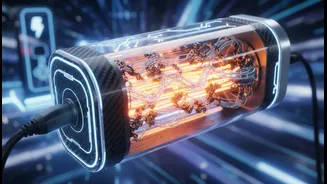
Virtually every EV on the road today runs on lithium-ion batteries. They are a proven, reliable technology, but they have limitations. Their energy density—the amount of energy stored in a given weight—is approaching a plateau. To get more range, manufacturers
have to add more batteries, which means more weight and higher costs. Furthermore, the graphite anodes used in these batteries can only absorb lithium ions so fast, which limits charging speeds. For years, scientists have known that replacing the graphite anode with one made of pure lithium metal could dramatically increase energy density, potentially doubling the range of an EV without adding weight.
The 'Holy Grail' and Its Obstacle
Using a lithium-metal anode is often called the 'holy grail' of battery research. Lithium metal is the lightest metal and has a massive capacity for storing energy. The problem? It's incredibly reactive and unstable during charging. Tiny, needle-like structures called dendrites can form on the surface of the lithium metal. These dendrites can grow through the battery, eventually causing a short circuit, which can lead to rapid failure and even fires. This safety risk and poor cycle life have been the primary hurdles preventing rechargeable lithium-metal batteries from reaching the market.
What Makes This New Design Different?
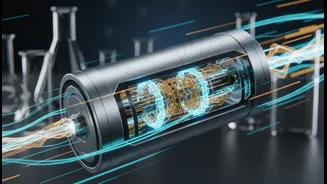
Recent breakthroughs from various research labs are finally taming the volatile lithium-metal anode. One promising strategy involves stabilizing the interface between the anode and the electrolyte, the medium that ions travel through. Researchers at institutions like the University of Wisconsin-Madison have developed design rules for engineering the anode's surface at a nanoscale level to prevent dendrites from forming in the first place. Others, like teams at Stanford University, have created ultra-thin protective coatings that act as a barrier. One such method involves a flexible silver coating that diffuses into the surface, making the structure more resilient and preventing cracks where dendrites could grow. Another key area of innovation is the electrolyte itself, with many labs focusing on solid-state electrolytes—using a solid ceramic or polymer instead of a flammable liquid—to physically block dendrite growth.
More Power, Less Weight, Faster Charging
The benefits of a stable lithium-metal battery would be transformative. Current lithium-ion cells top out around 270 Wh/kg, but recent lab prototypes of lithium-metal cells have demonstrated energy densities exceeding 450 Wh/kg, with some companies targeting 500 Wh/kg. For an EV driver, this could mean doubling the driving range from 400 kilometres to 800 kilometres on a single charge, or keeping the same range while making the car significantly lighter and more efficient. The technology could also enable much faster charging. Some prototypes have shown the ability to recharge in minutes rather than hours, a game-changer for long-distance travel.
The Road to Your Next Car
While these lab results are incredibly promising, it's important to manage expectations. A successful lab prototype is a long way from mass production. The new materials and manufacturing techniques need to be proven to be cost-effective and scalable. Researchers must validate that these batteries can last for thousands of charge cycles in real-world conditions, not just a few hundred in a lab. Still, the progress is undeniable. Major battery manufacturers like CATL and automakers like Toyota and Nissan are investing heavily, with some forecasting the first vehicles with solid-state or lithium-metal batteries could be on the road by 2028. This isn't just a theoretical exercise anymore; it's a multi-billion dollar race to build the next generation of energy storage.