






Understanding Your Body's Internal Clock
Deep inside your brain is a master clock known as the circadian rhythm. This 24-hour cycle governs nearly all your bodily functions, from hormone release and digestion to, most importantly, your sleep-wake cycle. For most people, this internal clock is synchronised
with the sun. Bright morning light signals 'wake up', while darkness in the evening tells the brain to produce melatonin, the hormone that makes you sleepy. The fundamental challenge for night shift workers is that their work schedule is in direct conflict with this natural programming, leading to what's known as shift work sleep disorder for over a quarter of those working non-traditional hours.
Why Light After Sunset Is the Enemy of Sleep
The single most powerful signal for your circadian rhythm is light. Specifically, light on the blue end of the spectrum — the kind emitted by the sun, but also by our phone screens, tablets, televisions, and standard LED or fluorescent bulbs — is particularly effective at suppressing melatonin production. When you’re exposed to this type of light in the evening or early morning after a night shift, your brain gets a powerful, confusing message: 'It’s daytime! Stay awake!'. This makes falling asleep for a restorative daytime rest incredibly difficult, even when you're physically exhausted.
Strategy 1: Block Blue Light After Your Shift
The first and most crucial step is to create a period of artificial darkness as you transition from work to sleep. On your commute home in the morning, wear dark, wrap-around sunglasses to block out as much daylight as possible. Some studies even suggest that wearing amber-tinted or blue-light-blocking glasses can be highly effective. Once you're home, the goal is to keep the environment dim. Avoid turning on bright overhead lights. Instead, use a single, low-wattage lamp if you need to see. This signals to your brain that the 'day' is ending, allowing melatonin levels to rise naturally.
Strategy 2: Embrace Warm-Coloured Lighting
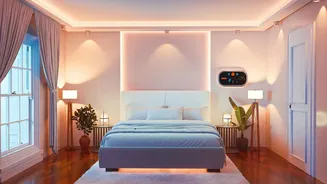
Not all light is created equal. While blue light is a powerful stimulant, light on the red, orange, and amber end of the spectrum has a much smaller impact on your circadian rhythm. Research shows that red light is one of the best colours to use at night because it does not significantly suppress melatonin. Before you plan to sleep, switch any necessary lighting to warm-toned bulbs. Consider using a dim red or amber light as a night light or for reading. This provides enough visibility to move around safely and wind down without sending a 'wake up' signal to your brain.
Strategy 3: Strategic Bright Light Before Your Shift
Managing your circadian rhythm is a 24-hour job. Just as you need darkness to promote sleep, you need bright light to promote alertness when you wake up before your shift. When you get up in the evening, expose yourself to bright light. Spending time in a brightly lit area or even using a light therapy lamp (delivering 2,000 to 10,000 lux) for the first half of your shift can significantly boost alertness and performance. This reinforces the 'daytime' signal at the correct time for your schedule, helping to more firmly anchor your new sleep-wake cycle.