



A Metal World in Our Backyard
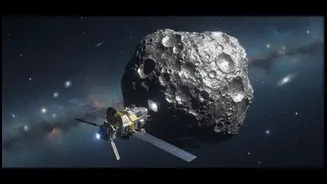
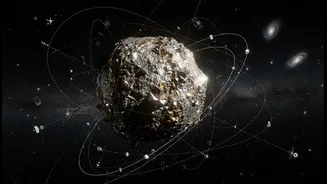
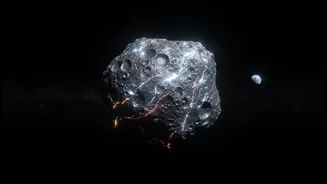
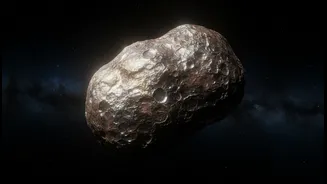
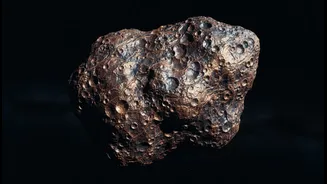
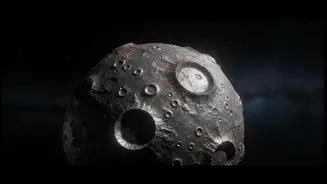
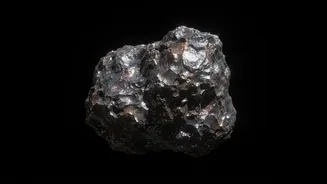
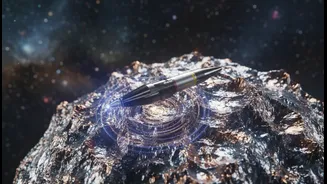
Discovered in 1852, 16 Psyche is no ordinary space rock. While most asteroids are primarily rock or ice, Psyche is unusually dense and thought to be rich in metals like iron and nickel, similar to the Earth's own core. It's a potato-shaped giant, measuring
about 280 kilometers at its widest point. Scientists theorize that Psyche might be the exposed core of a protoplanet—a world that was forming in the early solar system but was destroyed by violent collisions, which stripped away its rocky outer layers. This makes it an invaluable scientific target. Because we can't drill down to Earth's core, studying Psyche is the next best thing—a chance to see the hidden building blocks of planets.
The Psyche Mission's Long Journey
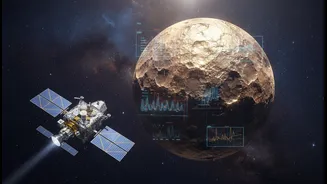
To investigate this mysterious world, NASA launched the Psyche spacecraft in October 2023. The van-sized probe is on a six-year, 3.6-billion-kilometer voyage to rendezvous with the asteroid. The mission is one of firsts; it will be the first time a spacecraft has visited a world thought to be made mostly of metal rather than rock or ice. In May 2026, the spacecraft successfully performed a crucial maneuver, flying by Mars to get a gravity-assist. This cosmic slingshot boosted its speed and adjusted its trajectory, putting it on a direct path to arrive at Psyche in the summer of 2029. Once it arrives, the spacecraft will not land but will enter orbit, spending nearly two years mapping the surface and studying its composition with a suite of advanced instruments.
New Data Before Arrival
Even with the probe still years away from its target, scientists are constantly gathering new information from Earth. The headline-making "new data" often comes from sophisticated ground-based observations and computer simulations that refine our understanding of Psyche. Recent analyses of how the asteroid reflects radar and absorbs heat suggest it might be a mix of rock and metal, with a metallic content between 30% and 60% by volume. Furthermore, new simulations focusing on the asteroid's large craters are helping scientists predict what the probe's instruments will find. By modeling how impacts would affect a pure metal body versus a metal-silicate mix, researchers are creating a framework to interpret the data the Psyche probe will eventually send back, helping them solve the puzzle of its origin.
The Trillion-Dollar Question
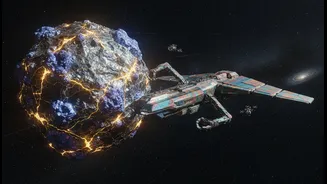
The immense amount of iron, nickel, and potentially precious metals like gold on Psyche has led to staggering monetary valuations, with some estimates placing its worth in the quintillions of dollars. This hypothetical price tag, often calculated by multiplying the estimated quantity of metals by current market rates, has captured the public imagination. This figure has positioned Psyche as a poster child for the future of asteroid mining and a space-based economy. While NASA's mission is purely scientific and has no plans for mining, the data it collects will be invaluable for future entrepreneurs and space-faring nations. Understanding the exact composition and accessibility of these metals is a critical first step toward the eventual, though still distant, reality of sourcing resources from space.
The Hurdles of Space Mining
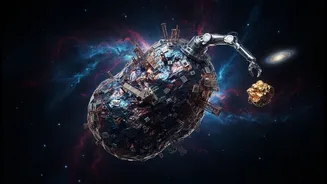
The idea of towing a quintillion-dollar asteroid back to Earth is pure science fiction for now. The technological, logistical, and economic challenges are immense. Developing spacecraft capable of mining in deep space, processing tonnes of raw material, and transporting it back to Earth would require staggering investment and decades of innovation. Furthermore, bringing such a vast quantity of metals back to Earth would likely crash global markets, paradoxically destroying the very value that made the asteroid so attractive in the first place. For now, the more realistic application of space resources is to use them in space—for example, using water from icy asteroids to create rocket fuel or metals from asteroids like Psyche to construct habitats and equipment for further exploration. This would reduce the enormous cost of launching everything from Earth.