



The Heart of the Matter: Choosing Your Corn
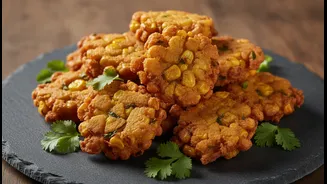
The star of the show is, of course, the corn. While fresh corn on the cob, available in abundance during this season, offers the best flavour, frozen corn is a fantastic and convenient alternative. If using fresh cobs, boil them until tender before scraping
off the kernels. If you're using frozen corn, ensure it is completely thawed and drained of any excess water. Moisture is the primary enemy of a crispy pakora. For the best texture, don't leave the kernels whole. Pulse them briefly in a mixer or food processor. You're aiming for a coarse mixture, not a fine paste. This partial crushing helps release the corn's natural starches and sweetness, allowing it to bind better with the batter and creating a more integrated flavour.
The Secret to a Perfect Crunch
The difference between a good pakora and a great one lies in the batter. The foundation is besan (gram flour), which provides a nutty flavour and is the traditional binding agent. But the secret to a truly shatter-crisp exterior is rice flour. A common ratio that yields excellent results is roughly three parts besan to one part rice flour. Rice flour is lighter and absorbs less oil, which guarantees that coveted crunch and prevents the pakoras from becoming greasy. When mixing the batter, avoid adding all the water at once. Start with your dry flours and spices, then add the crushed corn and onions. These vegetables will release their own moisture. Only then should you add water, a little at a time, until you have a thick, spoonable batter that coats the corn mixture without being runny.
A Symphony of Spices and Aromatics
Bland pakoras are a missed opportunity. While salt and red chilli powder are essential, a few extra additions can elevate your snack from simple to spectacular. Finely chopped ginger and garlic (or a paste) are non-negotiable for a pungent depth of flavour. Thinly sliced onions add a subtle sweetness and textural contrast. For a truly classic Indian flavour profile, add herbs and spices like chopped fresh coriander, curry leaves, a pinch of turmeric for colour, and ajwain (carom seeds), which aids digestion and imparts a unique, slightly sharp taste. Some recipes also call for a pinch of asafoetida (hing) or a sprinkle of chaat masala for a tangy finish.
The Science of Frying
How you fry is just as important as what you're frying. Use a neutral oil with a high smoke point, like vegetable or sunflower oil. The oil temperature is critical: if it's too low, the pakoras will absorb a lot of oil and turn soggy; if it's too high, they'll brown too quickly on the outside while remaining raw inside. The ideal temperature is around 175-180°C. A good way to test it without a thermometer is to drop a tiny bit of batter into the oil; it should sizzle immediately and rise to the surface without browning too fast. Don't overcrowd the pan. Frying in small batches ensures the oil temperature doesn't drop, allowing each pakora to cook evenly. For an extra-crispy finish, you can even double-fry them: fry once on medium heat until lightly cooked, remove and drain, then fry again on high heat until golden brown and crisp.
Serving and Savouring
Corn pakoras are best enjoyed immediately, straight from the kadai, after a brief rest on a paper towel to absorb any excess oil. The classic pairing is a steaming cup of masala chai, a combination that feels like a warm hug on a rainy day. Serve them with a side of tangy green chutney (made with coriander and mint) or a sweet and sour tamarind chutney for the perfect dipping experience. The contrast of the hot, crispy pakora with the cool, flavourful chutney is what makes this snack an enduring monsoon favourite across India.