







A New Passport, An Old Case
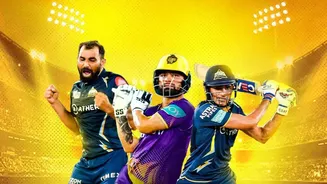
Lalit Modi, the architect of the high-profile Indian Premier League (IPL), has been in the United Kingdom since 2010, the same year he was suspended by the Board of Control for Cricket in India (BCCI) amid allegations of financial misconduct. Over the years,
Indian authorities have sought his return to face investigations related to charges under the Prevention of Money Laundering Act (PMLA) and the Foreign Exchange Management Act (FEMA). The saga took a fresh turn in mid-November 2026 when Modi announced he had acquired British citizenship, celebrating the milestone at the Oxford Union. This isn't his first attempt at securing a new nationality; a previous acquisition of a Vanuatu passport in 2025 was swiftly cancelled by the island nation's government. Now, with a British passport in hand, the legal landscape surrounding his potential extradition has become significantly more complex, though not necessarily impenetrable.
Does British Citizenship Block Extradition?
In short, no. Acquiring British citizenship does not provide automatic immunity from extradition. The 1992 India-UK Extradition Treaty, which came into force in November 1993, explicitly allows for the extradition of each other's nationals. Article 4 of the treaty clarifies that it does not prevent the UK from surrendering its own citizens for trial in India. Legal experts confirm that from a treaty perspective, his new citizenship is not a legal barrier. UK law itself does not prohibit the extradition of British citizens. However, the change in status is far from meaningless. As a British citizen, Modi is now entitled to the full range of legal protections afforded to any UK national, which can make the process more protracted and complicated. For instance, options like deportation for immigration violations are now off the table, leaving a formal extradition request as India's only pathway.
The Intricacies of the India-UK Treaty
The path to extradition between India and the UK is notoriously challenging, a fact underscored by the presence of other high-profile Indian fugitives in Britain. To succeed, a request must navigate a multi-layered legal process. A core requirement is 'dual criminality', meaning the alleged offence must be a crime punishable by at least one year in prison in both India and the UK. India must make a formal request through diplomatic channels, backed by sufficient evidence to satisfy UK courts. India has previously sought Modi's return. A non-bailable warrant was issued against him in 2015, and a formal request based on it was forwarded to British authorities in 2017. However, the process is subject to numerous legal challenges in UK courts. Defendants can, and often do, argue against extradition on human rights grounds, citing potential for an unfair trial or poor prison conditions in the requesting country—arguments that have been used in other high-profile cases.
What Changes Practically?
While the law permits his extradition, Modi's new status as a British citizen fundamentally alters the practical dynamics. He now has a stronger claim to challenge any extradition request from the position of a UK national, with all the associated rights and legal aids. This adds another layer for Indian agencies to navigate. The process, already known for being slow and cumbersome, is likely to become even more so. Modi himself has argued he is not a 'fugitive' as he has not been convicted of any crime in India. This new citizenship is a strategic move that, while not a legal 'get out of jail free' card, bolsters his ability to resist extradition efforts from what he has called his 'home' for many years. It forces India to pursue the single, highly challenging route of formal extradition under a treaty that has historically seen limited success for such cases.