





A Crisis of Timing
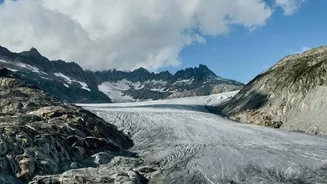
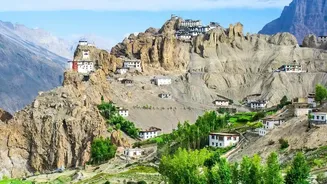
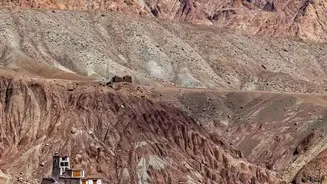
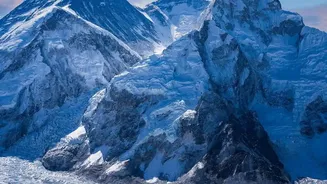
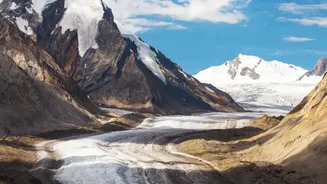
High-altitude regions like Ladakh face a unique water problem driven by climate change. Traditionally, farmers depended on the slow melt of massive glaciers to water their crops during the crucial spring sowing season. However, rising global temperatures
are causing glaciers to retreat and melt earlier and faster. This creates a devastating imbalance: a torrent of unusable water in late winter when fields are frozen, followed by a severe shortage in spring when it's needed most. With annual rainfall often less than 50mm, this disruption threatens the very survival of agriculture and the livelihoods of entire communities.
An Idea Inspired by Ice
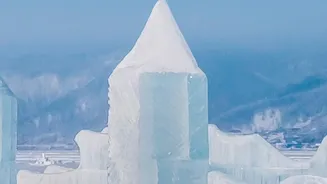
The solution came from Ladakhi engineer and innovator Sonam Wangchuk. He observed that a patch of ice under a bridge had survived well into the late spring because it was shielded from direct sunlight. This sparked an idea: what if you could store the abundant winter streamflow as ice that would last until the planting season? The challenge was shading a large volume of water. Wangchuk's insight was to change the shape. Instead of a flat, horizontal sheet of ice with a large surface area exposed to the sun, he envisioned a vertical cone. This shape, resembling the sacred Buddhist stupas common in Ladakh, minimises the surface area exposed to the sun and maximises the volume of ice, allowing it to melt much more slowly.
The Simple Genius of an Ice Stupa
The beauty of the ice stupa lies in its simplicity and use of basic physics. No complex machinery or external power is required. A pipe channels water from a glacial stream at a higher elevation. Gravity creates natural pressure, forcing the water down and then up through a vertical pipe at the stupa site, where it sprays out like a fountain. In the frigid winter air, especially at night, the water freezes as it falls, gradually building a massive cone of ice layer by layer. The first prototype, built in 2013, was just six metres tall but successfully stored 150,000 litres of water, which lasted until mid-May, long after other ice had melted.
From Ladakh to the Global Stage
The success of the ice stupas in Ladakh, a project driven by Wangchuk's NGO, SECMOL, quickly garnered international attention. The concept was elegant, scalable, and community-driven. Mountain regions facing similar climate-induced water shortages saw a potential lifeline. The technique has been successfully exported to other parts of the world. In Switzerland, the first European ice stupa was built as early as 2016 in collaboration with local glaciologists to combat glacial retreat in the Alps. In Chile's Andes mountains, the Nilus Project is building dozens of ice stupas to combat intense drought and provide water for communities in the Cajon del Maipo region. The technique is also being adopted in other parts of the Himalayas, including Pakistan, to help local agricultural communities adapt.
A Symbol of Hope and Adaptation
The global adoption of the ice stupa technique is a testament to the power of local innovation. It demonstrates that effective climate adaptation doesn't always require expensive, high-tech solutions. The projects are more than just water reservoirs; they are community-building exercises. In Ladakh, competitions are held to see which village can build the tallest stupa, fostering engagement and local pride. Sonam Wangchuk's work, which earned him a Rolex Award for Enterprise, has helped establish the Himalayan Institute of Alternatives (HIAL), a centre for mountain development. The ice stupa has become a powerful global symbol of how indigenous knowledge and creative engineering can come together to offer hope and resilience in the face of a changing climate.