




Two Worlds, One Unforgiving Environment
Traditionally, medicine and aerospace engineering have operated in separate orbits. Aerospace engineers are masters of physics, propulsion, and materials science; they build the vessels that defy gravity. Doctors, on the other hand, are experts in human
biology, diagnosing and treating illness here on Earth. The problem is that the human body, a product of millions of years of evolution in Earth's gravity, behaves in profoundly different and often alarming ways in space. Aerospace engineers can build a perfect habitat, but they aren't trained to counteract the physiological crises that unfold inside it. Doctors can treat bone density loss or cardiovascular issues, but they aren’t equipped to design the life support systems or radiation shielding needed to prevent them in the first place. This is the crucial gap: the space between the machine and the person living inside it, hundreds of thousands of miles from the nearest hospital.
The Hidden Toll of Zero Gravity
Life in microgravity is a relentless assault on the human body. Without the constant pull of gravity, astronauts can lose bone density at a rate of 1.5-2% per month. Muscles, particularly in the legs and back, begin to atrophy from disuse. The cardiovascular system, no longer needing to work as hard to pump blood upwards, can decondition, and fluids shift into the upper body, causing the characteristic 'moon face' seen in astronauts. Beyond that, there are the invisible threats. Space is saturated with cosmic radiation, dramatically increasing the lifetime risk of cancer. The immune system becomes dysregulated, making astronauts more susceptible to infections. Add to this the psychological stress of isolation, confinement, and disrupted sleep cycles, and it becomes clear that keeping an astronaut healthy is a monumental challenge. Simply sending a doctor along for the ride isn't enough; the solutions must be integrated into the very design of the mission.
Enter Bioastronautics: The Human Factor Engineers
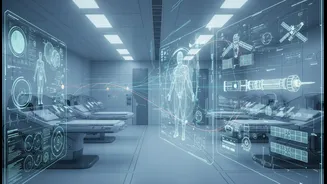
Bioastronautics is the interdisciplinary science that exists to solve these very problems. It is the formal study of how to keep life, specifically human life, safe and productive in the space environment. This field merges biology, medicine, and engineering to treat the astronaut and the spacecraft as a single, integrated system. A bioastronautics expert doesn't just ask, "How do we treat muscle atrophy?" They ask, "How can we design a spacecraft, a diet, and an exercise regimen that collectively minimises muscle atrophy on a three-year mission to Mars?" Their work involves everything from designing more effective exercise equipment and radiation shielding to developing closed-loop life support systems that recycle air and water, creating bioregenerative food sources, and establishing medical protocols for diagnosing and treating illness in deep space.
Forging a New Generation of Experts
This unique, hybrid expertise doesn't just appear. It must be cultivated, which is where specialised bioastronautics fellowships come in. These programmes, often run by universities in partnership with space agencies and private companies, are the critical link in building the necessary talent pipeline. A typical fellowship might take a physician and immerse them in aerospace engineering, or take an engineer and give them a deep grounding in space-related physiology and medicine. Programmes at institutions like Harvard-MIT, UCLA, and the University of Colorado combine coursework in space life sciences with hands-on research and even rotations at NASA or companies like SpaceX. These fellowships create a new type of professional: someone who is fluent in both the language of medicine and the language of engineering, capable of acting as the ultimate translator between human health and mission hardware.
From Research to Reality
The work of these fellows is not theoretical. They are on the front lines of solving the most pressing risks in human spaceflight. Their research directly informs the development of countermeasures to protect astronauts. This could involve creating computational models to predict decompression sickness risk during spacewalks, designing wearable sensors for real-time health monitoring, or testing new pharmaceuticals to see if they remain stable on long-duration missions. As humanity sets its sights on returning to the Moon and eventually landing on Mars, the need for these experts will only grow. A mission to Mars will be an unprecedented endurance event, and its success will depend as much on mitigating bone loss and radiation exposure as it will on the rocket that gets them there. Bioastronautics specialists are the ones ensuring the human system arrives as healthy as the hardware.