




A Taste of the Heartland
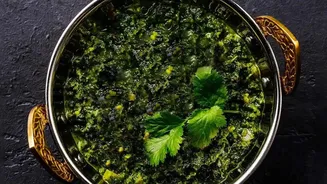
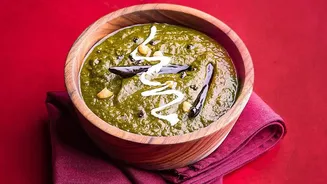
Sarson ka Saag is fundamentally a celebration of the winter harvest. Originating from the fertile fields of Punjab, this dish was born from the lifestyle of farmers who needed nourishing, energy-rich meals to sustain them through long days of labour.
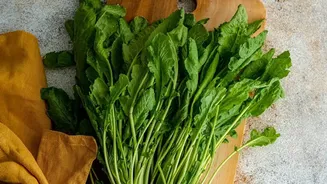
Its very essence is tied to the seasonal availability of mustard greens (sarson), which flourish in the cooler months. Historically, this was rustic, peasant food, slow-cooked for hours in village homes and enjoyed for its robust, earthy flavours. Today, it has transcended its humble origins to become a beloved delicacy in homes and restaurants across India, embodying the soul of Punjabi cuisine.
A Symphony of Greens
The magic of Sarson ka Saag lies in its blend of leafy greens. While mustard leaves provide the signature pungent, slightly bitter base, they are rarely used alone. To balance the flavour and enhance the texture, cooks traditionally add other seasonal greens like spinach (palak), fenugreek (methi), and especially bathua (chenopodium or pigweed). This combination creates a complex flavour profile that is both peppery and wholesome. The greens are slow-cooked until they are meltingly tender, then mashed to a coarse, creamy consistency, often with the addition of maize flour (makki ka atta) to act as a thickener.
A Nutritional Powerhouse
Beyond its comforting taste, Sarson ka Saag is a nutritional heavyweight, perfectly designed by nature for winter wellness. Mustard greens are packed with vitamins A, C, and K, as well as antioxidants that help boost the immune system during cold and flu season. This dish is a rich source of dietary fibre, which aids digestion, and iron, which helps combat the lethargy often felt in colder weather. According to Ayurveda, mustard greens have a warming effect on the body, stimulating circulation and digestion, making this dish a functional food perfectly suited for winter.
The Art of the Tempering and Perfect Pairings
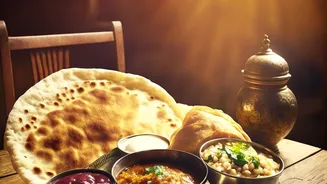
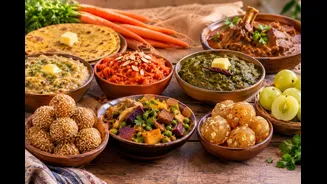
While the slow-cooked greens form the heart of the saag, the final tempering, or 'tadka', is what brings it to life. A sizzling mix of ghee, finely chopped onions, ginger, garlic, and sometimes tomatoes is poured over the cooked greens just before serving. This step adds a crucial layer of aromatic flavour. No discussion of Sarson ka Saag is complete without mentioning its soulmate: Makki ki Roti. This rustic flatbread, made from maize flour, has a slightly sweet, earthy taste that perfectly complements the robust saag. The classic way to serve this iconic duo is with a generous dollop of white butter (makhan) melting into the warm saag, and a side of jaggery (gur) and sliced onions.
Bringing the Tradition Home
While the traditional method of cooking saag for hours in an earthen pot is a beautiful idea, modern kitchens have adapted the process for convenience. A pressure cooker or an Instant Pot can significantly reduce the cooking time without compromising on the deep flavours. The key is to cook the greens until they are completely soft before blending. An immersion blender can achieve the desired coarse texture, but pulsing carefully in a regular blender works too. The ratio of greens can be adjusted to your taste; a common starting point is a 2:1:1 ratio of mustard greens to spinach and bathua. Don't be afraid to be generous with ghee and garlic in the tempering, as they are essential to the authentic taste.