

Nature's Living Architecture
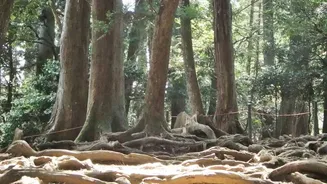
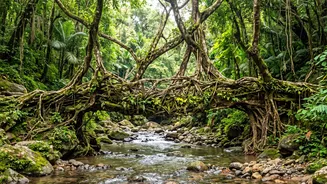
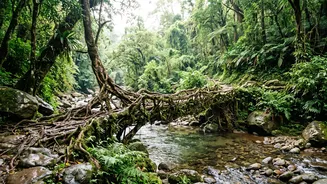
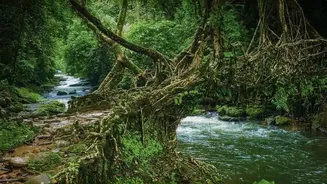
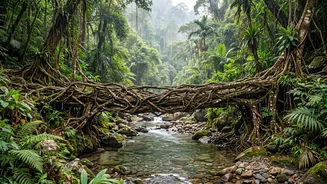
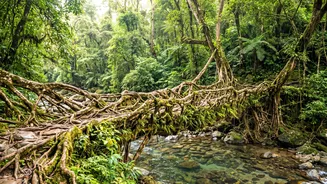
Deep within the East Khasi Hills, the local Khasi and Jaintia communities have mastered a form of natural engineering that is breathtaking to witness. For centuries, they have guided the aerial roots of the Ficus elastica (rubber fig) tree across rivers
and gorges, weaving them into sturdy, living structures. Unlike concrete and steel, these root bridges grow stronger over time, with some of the oldest being in use for well over a century. This remarkable tradition showcases a harmonious relationship between humanity and nature, creating pathways that are both functional and profoundly beautiful. The most famous of these is the double-decker root bridge in Nongriat village, a two-tiered marvel that has become an icon of Meghalaya.
The Journey to Nongriat
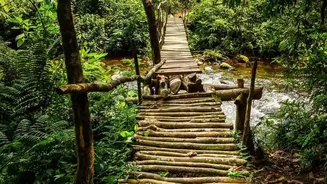
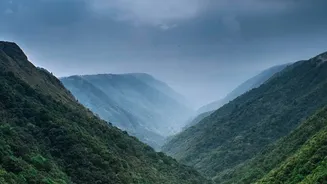
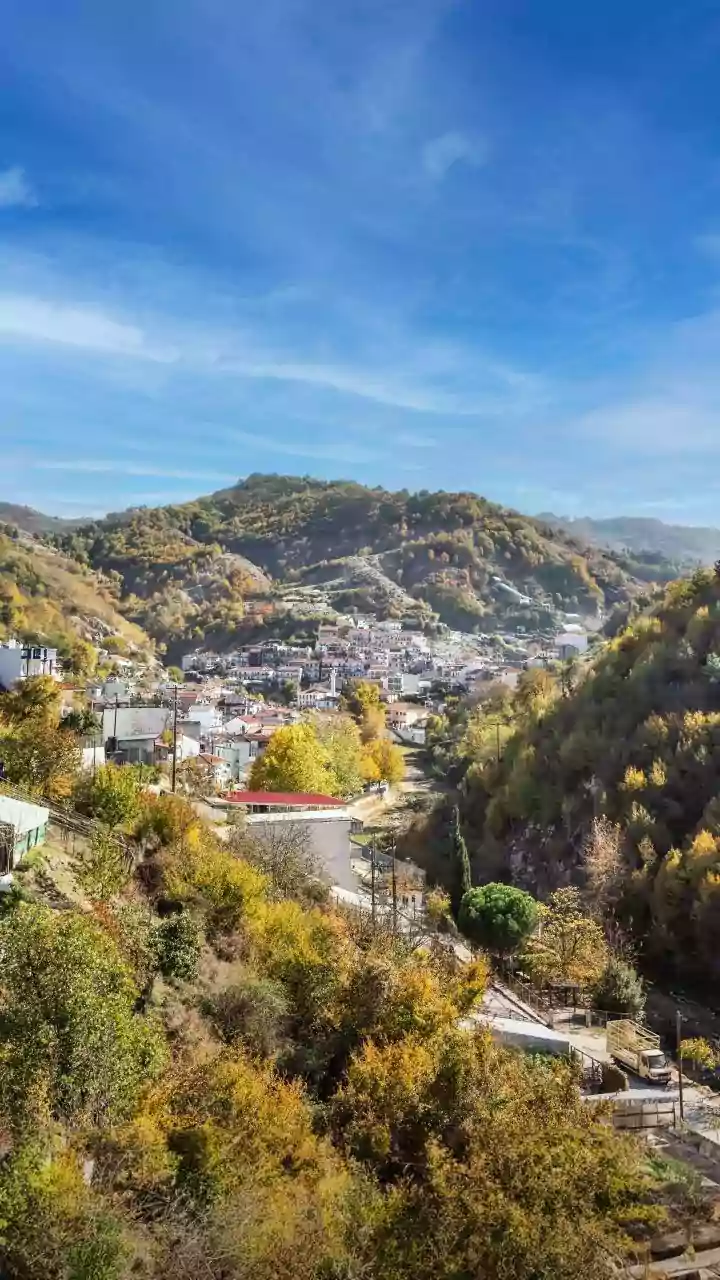
The adventure to the most celebrated bridges begins not with a bus ride, but with a descent. The starting point for the trek is Tyrna village, a short drive from the town of Cherrapunji (also known as Sohra). From Tyrna, a challenging but rewarding trek of approximately 3,500 steps leads down into the valley to Nongriat village. The journey itself is an experience, taking you through dense foliage, past smaller villages, and across swaying suspension bridges. The descent can take around two hours, but the views of the lush, green valley make every step worthwhile. For first-timers, hiring a bamboo walking stick at the start of the trail is highly recommended.
Budgeting Your Trip
Meghalaya is surprisingly friendly to the backpacker's wallet. The biggest cost-saver is transport. From Guwahati, the nearest major rail and air hub, shared taxis to Shillong are abundant and affordable. From Shillong, more shared sumos ply the route to Cherrapunji. This is the most economical way to travel, offering a chance to meet locals along the way. Food is another area where you can save. Small eateries in Cherrapunji and homestays in Nongriat serve delicious and hearty Khasi meals for a fraction of what you'd pay in a tourist restaurant. A thrifty backpacker can comfortably manage their daily expenses, making this an accessible dream trip.
Homestays: Your Home in the Hills
The best way to experience Nongriat is to stay overnight, and a network of simple, family-run homestays makes this possible. Staying in the village allows you to see the bridges in the quiet hours of the early morning or late evening, free from the crowds of day-trippers. These homestays offer basic but clean lodging and authentic home-cooked meals, with prices often ranging from ₹500 to ₹900 per night. This not only keeps your budget in check but also provides an invaluable opportunity to connect with the local Khasi culture and support the community directly.
When to Go and What to See
The best time to tackle the trek is between October and April. During these post-monsoon and winter months, the weather is pleasant, the skies are clearer, and the trails are much drier and safer to navigate. While the monsoon (June to September) brings the region's famous waterfalls to their thunderous peak, it also makes the stone steps extremely slippery and the trek more hazardous. Once in Nongriat, after marvelling at the double-decker bridge, consider extending your trek for another hour or so to find Rainbow Falls. This stunning waterfall cascades into a turquoise pool, offering a perfect spot for a refreshing, well-earned dip.