







Why Proof is Non-Negotiable
Unlike salaried employees who receive a Form 16, freelancers must act as their own accountants. The Income Tax Department treats your freelance earnings as “Profits and Gains from Business or Profession”. This means you are legally required to report
all income accurately. Without proper proof, you risk facing scrutiny, penalties up to 200% of the tax due, and delays in processing your return. Matching your declared income with data from your Annual Information Statement (AIS) and Form 26AS is crucial, as mismatches are a primary trigger for tax notices. Proper documentation not only ensures compliance but also empowers you to claim legitimate deductions, ultimately reducing your tax liability.
The Essential Documents for Income Proof
To build a clear and verifiable record of your earnings, you need to systematically collect several key documents throughout the financial year. Your bank account statement is a primary document, especially if all your professional receipts are channeled through it. Additionally, maintain a folder with copies of all invoices you've sent to clients. For payments received through platforms like Upwork or Fiverr, download your earnings statements. Contracts or work agreements can also serve as supporting evidence of your professional engagements. Finally, your Form 26AS and AIS, downloadable from the income tax portal, provide a consolidated view of all tax deducted at source (TDS) by your clients and other financial transactions linked to your PAN.
Don't Forget Proof for Your Expenses
Proving your income is only half the story. To lower your taxable income, you must also provide proof for all business-related expenses. Keep every receipt and bill for costs such as co-working space rent, internet and phone bills, software subscriptions, office supplies, and travel for client meetings. You can even claim depreciation on assets like a new laptop purchased for work. If you work from home, you can claim a portion of your rent and utility bills as a business expense, but be prepared to justify the percentage of your home used for work. Meticulous record-keeping is vital; without proof, you cannot claim these valuable deductions.
A Simpler Path: The Presumptive Tax Scheme
For many freelancers, maintaining detailed books of accounts can be a hassle. The Income Tax Act offers a simpler alternative: the Presumptive Taxation Scheme under Section 44ADA. If your total gross receipts from your profession are under ₹75 lakh in a financial year (and at least 95% of receipts are digital), you can opt for this scheme. Under Section 44ADA, 50% of your total receipts are presumed to be your taxable income, and the remaining 50% is considered your expenses. This means you don't need to provide proof for individual expense claims. You can simply declare 50% of your income as profit and pay tax on that amount. This simplifies compliance significantly and allows you to file the simpler ITR-4 form.
Choosing the Right ITR Form
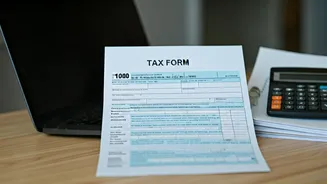
Selecting the correct Income Tax Return (ITR) form is critical to avoid your return being marked as defective. If you opt for the Presumptive Taxation Scheme under Section 44ADA, you should file ITR-4 (Sugam). If you do not use the presumptive scheme and want to claim actual expenses (which might be more than 50% of your income), you must file ITR-3. ITR-3 is more detailed and requires you to prepare a balance sheet and a profit and loss statement. Freelancers should generally avoid using ITR-1, which is intended for individuals with only salary income.