



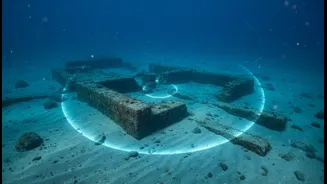


A Glimpse Beneath the Waves
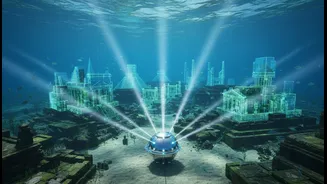
Scientists from the National Institute of Ocean Technology (NIOT), in collaboration with the Tamil Nadu State Department of Archaeology (TNSDA), have identified what appear to be significant man-made constructions submerged in the Bay of Bengal. The discovery
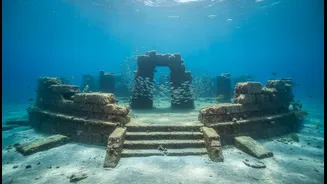
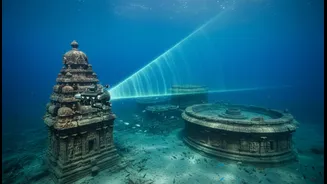
was made during a sophisticated underwater survey conducted off the coast of present-day Thoothukudi, near the location of the legendary Pandyan port of Korkai. While physical verification is still pending, the initial sonar data has generated considerable excitement, pointing towards a cluster of structures that could rewrite a chapter of ancient Tamil history. This find is part of a broader push by the state to explore its extensive and historically rich coastline, which has long been a hub of maritime trade.
The Technology Piercing the Past
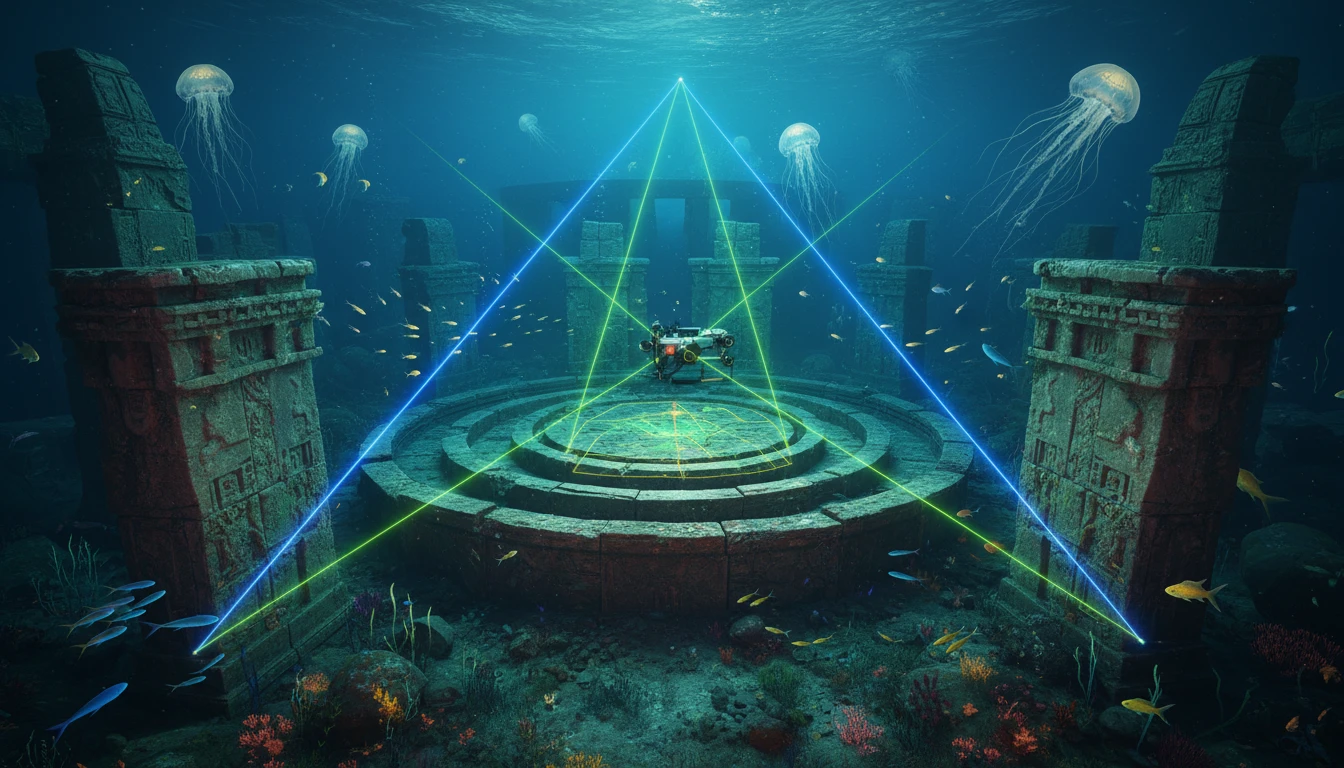
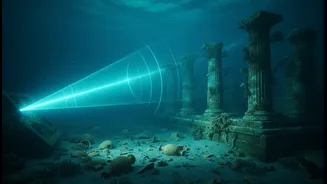
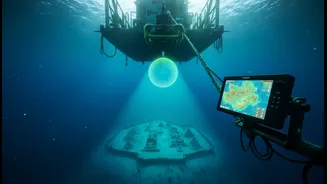
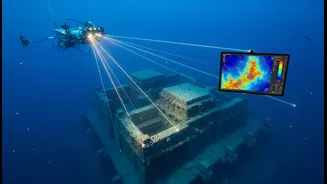
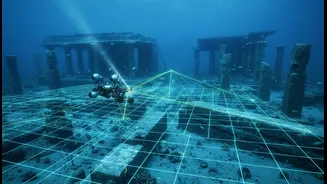
The discovery was not made with shovels and brushes, but with sound waves. The NIOT team employed advanced equipment, including side-scan sonar, to map the seabed. This technology functions like an underwater ultrasound, sending out acoustic pulses and interpreting the echoes to create a detailed image of the ocean floor. By analysing anomalies in the returning signals, researchers can distinguish between natural rock formations and features that bear the hallmarks of human construction, such as walls, platforms, or other organised layouts. This non-invasive first step is crucial in marine archaeology, allowing scientists to pinpoint promising locations for more resource-intensive investigations like sending down divers or remotely operated vehicles (ROVs).
Connecting to the Legendary Port of Korkai
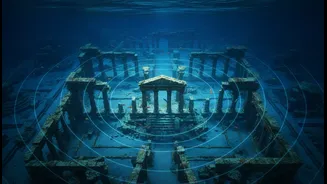
The location of the find is what makes it particularly significant. The survey was focused on the area near the mouth of the Thamirabarani River, believed to be the site of Korkai, a bustling port city that was the first capital of the Early Pandya Kingdom. Mentioned in Sangam literature and even by Greco-Roman geographers like Ptolemy, Korkai was famous for its pearl fisheries and extensive trade links with the West and Southeast Asia. However, over centuries, the sea receded, and the once-thriving port is now located several kilometres inland. Archaeologists have long hypothesised that parts of the ancient port complex or associated structures could have been submerged due to coastal erosion, river course changes, or other geological events. This new sonar data provides the strongest evidence yet to support those theories.
Echoes of Poompuhar and Sunken Cities
This is not the first time that evidence of submerged settlements has emerged along the Tamil Nadu coast. Similar underwater explorations have been conducted off Poompuhar (also known as Kaveripoompattinam), another legendary port city of the Chola dynasty. Those surveys, some initiated decades ago, also revealed submerged structures like brick walls and jetties, lending credence to literary accounts in epics like 'Silappatikaram' and 'Manimekalai' that describe a large city being consumed by the sea. These discoveries, from Poompuhar to Korkai, are part of a larger pattern suggesting that ancient Tamil civilisation had a far more extensive and dramatic relationship with the coast than is visible today. They hint at a past where shorelines were dynamic and human settlements were vulnerable to the power of the ocean.
What Happens Next?
Mapping is only the beginning. The next critical phase involves analysing the collected data to distinguish definitively between natural and man-made formations. Following this, marine archaeologists will need to conduct physical inspections. This could involve sending trained divers to the site to see, document, and potentially retrieve artifacts for dating. Remotely Operated Vehicles equipped with cameras can also provide a closer look without risking human lives in challenging underwater conditions. The ultimate goal is to confirm the nature of these structures, determine their age through scientific dating methods, and understand their connection to the historical port of Korkai. Each step is a painstaking process, but one that holds the promise of uncovering a lost piece of India's rich maritime heritage.