
Ghent, Belgium: The Authentic Alternative
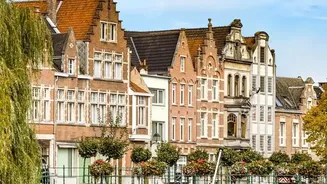
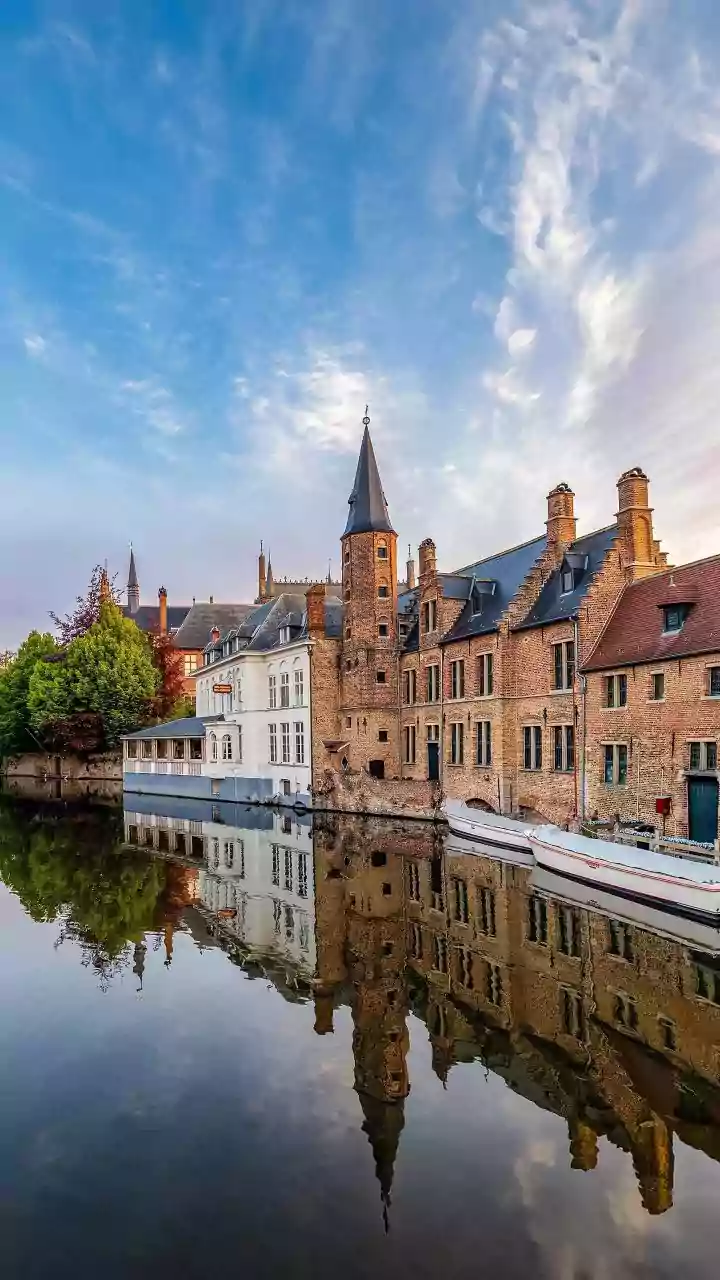
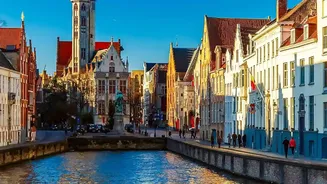
While many travellers flock to Bruges, the city of Ghent offers a more authentic Belgian experience. It boasts stunning canals and medieval architecture but remains a vibrant, living city with a large student population. The historic heart is anchored
by the formidable Gravensteen (Castle of the Counts), a 12th-century fortress with a moat, surrounded by a tangle of cobbled lanes in the Patershol district. Unlike the more polished, museum-like feel of Bruges, Ghent buzzes with local life day and night, offering a richer food scene and a sense of discovering a place where history and modern life genuinely coexist.
Olomouc, Czech Republic: Moravia’s Hidden Gem
Often overshadowed by Prague, Olomouc is a historical treasure and the former capital of Moravia. Its historic centre is the country's second-largest preservation zone after Prague's and is a delight to explore on foot. The main Upper Square (Horní náměstí) is home to the enormous, UNESCO-listed Holy Trinity Column and a unique astronomical clock, redesigned in the socialist-realist style. With its grand squares, six baroque fountains, and a thriving university atmosphere, Olomouc delivers the grandeur and charm of a major European city but on a more relaxed, accessible, and far less crowded scale.
Albi, France: The Red Brick City
Located in the Tarn region of southern France, Albi stands out with its striking red and orange brick architecture. The entire episcopal city is a UNESCO World Heritage Site, dominated by the Cathédrale Sainte-Cécile, the world’s largest brick cathedral. Built in the 13th century, its fortress-like exterior was designed to project the power of the Catholic church. Adjacent is the Palais de la Berbie, a former bishop's palace that now houses the Musée Toulouse-Lautrec, dedicated to the famous artist who was born in the city. Wandering through Albi’s medieval streets, like those in the old Castelviel district, feels like stepping back in time without the hustle of more famous French destinations.
Hall in Tirol, Austria: The Mint of the Empire
Just a short journey from bustling Innsbruck lies Hall in Tirol, a town with a medieval old town that is actually larger than its more famous neighbour's. This town's prosperity was built on salt mining from the 13th century, but its real claim to fame came in the 15th century when it became home to the Habsburg Empire's mint. It was here that the first Thaler coins, a precursor to the dollar, were struck. You can explore this history at the Hall Mint Museum inside Hasegg Castle. The town’s sprawling, well-preserved centre, with its quiet cobbled alleys and handsome townhouses, offers a peaceful and historically rich alternative to the more crowded tourist spots in Tyrol.
Sibiu, Romania: Transylvania's Saxon Heart
Founded in the 12th century by German settlers known as Transylvanian Saxons, Sibiu is one of Romania’s most beautiful and best-preserved cities. Its unique old town is split into an Upper Town and Lower Town, connected by winding passages and stairways. The city is famed for its distinctive 'houses with eyes'—small attic windows that peer out from the rooftops. The vast Great Square (Piața Mare) is surrounded by elegant buildings, including the Brukenthal Palace, home to Romania's oldest museum. With its fortified walls, defensive towers, and vibrant cultural scene, Sibiu offers a captivating journey into Transylvanian history away from the more-trodden paths.
Guimarães, Portugal: Birthplace of a Nation
While many visitors head to Lisbon or Porto, the city of Guimarães in northern Portugal holds a special place in the nation’s heart. It is famously known as the 'birthplace of Portugal'. It was here that Afonso Henriques, the first king of Portugal, was born, and the 1128 Battle of São Mamede fought nearby paved the way for the country's independence. An inscription on an old city wall proudly reads 'Aqui nasceu Portugal' (Portugal was born here). Its exceptionally well-preserved UNESCO-listed historic centre features a 10th-century castle, the Ducal Palace, and a maze of medieval squares and streets that have remained largely unchanged for centuries.