





Meet Your Nervous System’s Supervisor
Deep within your body runs the vagus nerve, the longest cranial nerve you have. Think of it as the main highway of your parasympathetic nervous system, the network responsible for your body's “rest and digest” functions. This system is the natural counterbalance
to the “fight or flight” response that floods you with stress hormones. When the vagus nerve is stimulated, it sends signals to your brain and major organs to slow down and relax. This process, known as increasing your 'vagal tone', is linked to better emotional regulation, resilience to stress, and improved overall well-being.
The Science of the Cold Shock
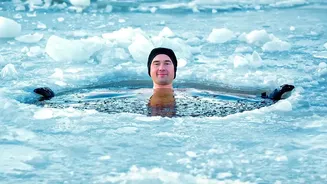
Splashing or immersing your face in cold water (ideally below 15°C) triggers a fascinating survival mechanism called the mammalian diving reflex. This reflex, present in all air-breathing vertebrates, is designed to conserve oxygen when submerged. The cold sensation on your face, particularly around the eyes and forehead, stimulates the trigeminal nerve. This nerve then sends a message to your brain, which in turn activates the vagus nerve. The effect is almost immediate: your heart rate begins to slow down within seconds, and blood flow is redirected from your limbs to your vital organs, including your brain. This powerful sequence effectively pumps the brakes on your body's acute stress response.
From 'Fight or Flight' to Calm
When you are stressed or anxious, your sympathetic nervous system takes over, increasing your heart rate and muscle tension. Activating the diving reflex through cold water immersion forces a shift back toward the parasympathetic nervous system. By stimulating the vagus nerve, you are manually telling your body that it is safe, helping to counteract the physiological symptoms of anxiety. This can be particularly effective for grounding yourself during moments of acute stress or panic. The sudden drop in heart rate and change in blood flow helps disrupt the feedback loop of anxiety, giving you a moment of clarity and calm to reset your emotional state.
How to Try It Safely and Effectively
You don’t need a full-body ice plunge to reap the benefits. A simple facial immersion is highly effective. To try it, fill a bowl with cold water; adding ice cubes can increase the effect. Take a deep breath and hold it while submerging your face for about 15 to 30 seconds. Holding your breath is a key part of triggering the diving reflex. Ensure the water covers your cheeks and forehead area. You can repeat this a few times, but listen to your body. The goal is to create a brief, manageable shock to the system, not to cause prolonged discomfort. For a less intense option, you can also press a cold compress or an ice pack against your upper face and hold your breath.
A Tool, Not a Total Cure
While cold water facial immersion is a powerful technique for managing acute stress, it's important to have realistic expectations. It provides temporary relief and is a fantastic tool for in-the-moment regulation, but it does not replace professional treatment for chronic anxiety, depression, or PTSD. Think of it as one of many exercises for your nervous system, alongside practices like deep breathing, meditation, and exercise, all of which can also help improve vagal tone. It is also important to be cautious; individuals with certain cardiovascular conditions should consult a doctor before attempting this technique, as the rapid change in heart rate can pose risks.