




The Unseen Engines of Modern Life
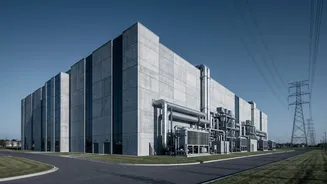
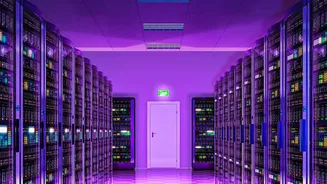
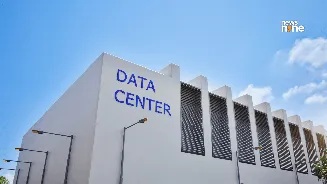
Every time you stream a video, join a video call, or use an AI-powered app, you are connecting to a data centre. These are not abstract concepts but vast, highly secure industrial facilities packed with tens of thousands of powerful computer servers.
They are the physical backbone of the digital economy, storing, processing, and moving the data that powers everything from financial markets to social media. But these digital fortresses cannot be built just anywhere. Their location is one of the most critical strategic decisions a company can make, dictated by a delicate and demanding balance of three fundamental resources: power, water, and network connectivity. Getting this decision right is essential for performance, cost, and increasingly, sustainability.
The Insatiable Thirst for Power
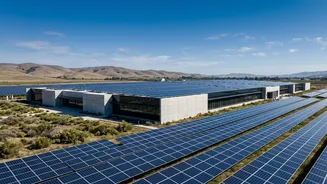
Data centres are among the most energy-intensive buildings in the world, consuming 10 to 50 times more energy per floor space than a typical commercial office. A single large-scale facility can require over 100 megawatts (MW) of power, enough to supply a small city. The rise of Artificial Intelligence (AI) has dramatically increased these demands, with the powerful GPUs used for AI models consuming significantly more electricity than traditional servers. This places an enormous strain on local electricity grids. Data centre developers must secure locations with access to a stable, reliable, and scalable power supply. Increasingly, this includes a push towards renewable energy. Major tech companies are among the largest corporate buyers of renewable energy, often funding new solar and wind projects to power their facilities and meet ambitious sustainability goals. Locating a data centre near a dedicated renewable power source is becoming a key strategic advantage.
Water: The Critical Cooling Component
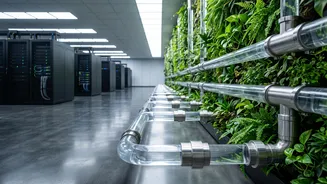
All of that concentrated computing power generates an immense amount of heat. Keeping servers from overheating is a primary operational challenge, and the most common method involves water. Through processes like evaporative cooling, data centres use vast quantities of water to dissipate heat. A single large data centre can consume millions of gallons of water per day, comparable to the usage of a small town. This makes water access a critical factor in site selection. In water-scarce regions, this level of consumption can create significant tension with local communities and agricultural needs. As a result, companies are under pressure to improve their Water Usage Effectiveness (WUE) and explore alternative cooling technologies, such as direct liquid cooling, which is more efficient for the high-density server racks used in AI. The choice of cooling technology is often a trade-off between water usage and energy consumption, a balance that must be carefully managed based on the local climate and resources.
Connectivity is King
A data centre is useless without fast, reliable, and high-capacity network connections. The speed at which data travels is constrained by the speed of light through fibre optic cables. Therefore, physical distance matters immensely. This delay, known as latency, is a critical factor for many applications. For services like online gaming, financial trading, and real-time AI, even a few milliseconds of lag can make a service unusable. To minimize latency, data centres must be located near major fibre optic routes and Internet Exchange Points (IXPs), where different networks connect. This is why major data centre hubs have historically clustered around cities like Mumbai and Chennai in India, which are landing points for major international submarine cables. Proximity to end-users and other businesses is crucial, creating dense digital ecosystems that further enhance connectivity and performance.
The Indian Equation
In India, the data centre market is expanding rapidly, with capacity projected to grow significantly by 2030. Cities like Mumbai, Chennai, Hyderabad, and Bengaluru are major hubs, driven by their access to submarine cable landings, large enterprise markets, and tech talent. However, as the demand for AI and cloud services grows, operators are facing the same core challenges. Securing reliable power from state distribution companies (DISCOMs), accessing sufficient water for cooling in a country with significant water stress, and ensuring diverse, high-quality fibre connectivity are the defining factors of site selection. The decision is no longer just about being close to customers; it is a complex assessment of long-term infrastructure reliability and the ability to scale in a competitive and resource-constrained environment.