






The Illusion of Daylight Safety
We tend to associate visibility issues with nighttime, but the Indian monsoon presents a unique set of daytime challenges. Heavy rain scatters sunlight, creating a diffuse, greyish haze that dramatically reduces contrast. Everything from the road to the sky
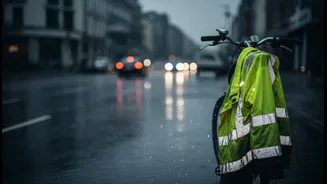
can seem to merge into a single muted tone. For drivers, a rain-streaked windshield, road spray from other vehicles, and the general gloom make it difficult to distinguish objects. Pedestrians in everyday clothing, especially those in dark or neutral colours, can become nearly invisible against this backdrop. Road safety experts note that reduced visibility is a primary cause of accidents during the monsoon, as it significantly delays driver reaction times. This isn't just about darkness; it's about a lack of contrast in an environment already demanding a driver's full attention.
The Limits of Bright Colours
The conventional wisdom for staying visible is to wear bright, fluorescent colours like neon yellow or orange. These colours work exceptionally well in normal daylight because their pigments react with the sun's UV rays, making them appear to glow. However, their effectiveness diminishes under the heavy, overcast skies typical of a monsoon downpour, where UV light is less intense. While a bright yellow raincoat is certainly better than a black or grey one, it relies on the presence of ambient light to be seen. It's a passive form of visibility. This is where reflective materials offer a crucial, active advantage, even during the day. Drivers are often advised to turn on their low-beam headlights during heavy rain to make themselves more visible to others, and this is precisely the condition where reflective gear shines.
How Retro-Reflection Works
Reflective details on clothing and accessories typically use retro-reflective materials. Unlike a simple mirror that bounces light away at an opposing angle, retro-reflective surfaces are engineered with microscopic glass beads or prisms. These structures catch a light source—like a car's headlights—and reflect it directly back to its origin with minimal scattering. The result is a brilliant, focused flash of light that is impossible for the driver to miss. In the low-light conditions of a rainy day, when drivers have their headlights on, a pedestrian with even small retro-reflective elements on their clothing will appear to light up, instantly separating them from the dreary background. This technology turns a driver's own lights into a safety tool for the pedestrian, creating a powerful signal that grabs attention from hundreds of feet away.
A Guide to Smart Reflective Gear
Integrating reflective elements into your monsoon wardrobe is easier than ever and doesn't require you to look like a construction worker. Many modern brands now incorporate these safety features in subtle and stylish ways. Look for rain jackets and windcheaters with reflective piping along the seams, on zippers, or as part of the brand logo. For those who commute on two-wheelers or cycles, a lightweight, packable vest with reflective strips is an invaluable addition. Even everyday accessories can boost your visibility. Consider backpacks with built-in reflective panels, umbrellas with a reflective trim, or running shoes that feature reflective accents on the heel and sides. These small details, strategically placed on moving parts of your body, catch the light and create a dynamic, unmissable signal for motorists.
Safety as a Style Statement
The fear of looking overly conspicuous or unfashionable has long been a barrier to adopting high-visibility gear. However, the design world is catching up, with many activewear and urban fashion brands now championing 'stealth-reflective' technology. These are materials that appear as a normal, often matte grey or black fabric in regular light but burst into a bright, reflective white when hit by a direct light source like headlights. This allows for clothing that is both stylishly discreet for a walk into the office and incredibly effective for a dark, rainy commute home. From sneakers to jackets and even cycling capes, functional design is merging with safety, proving that you don't have to choose between looking good and being seen.