


Our Star's Violent Temper
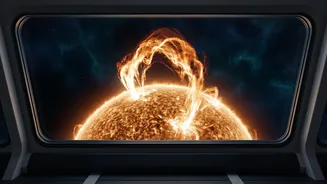
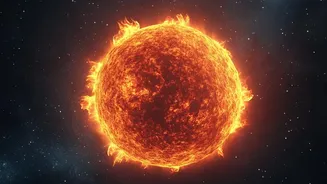
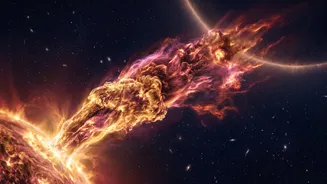
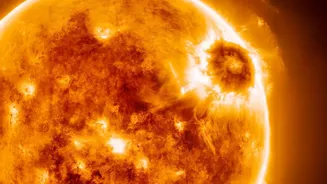
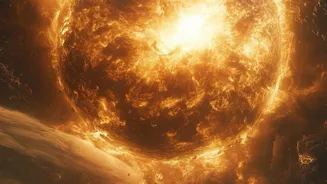
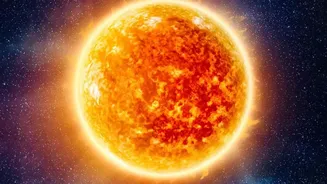
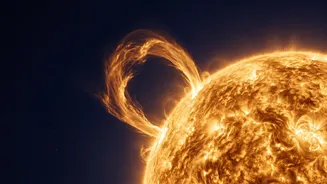
The Sun isn't just a benign source of light and warmth; it's a volatile star with a dynamic cycle of activity. During its most active periods, it can unleash colossal eruptions of energy and matter. The most concerning of these are coronal mass ejections
(CMEs), which are massive clouds of charged particles and magnetic fields hurled into space. If a CME is aimed at Earth, it can interact with our planet's magnetic field and trigger a geomagnetic storm. While our atmosphere protects life on the ground, the consequences for our technology can be severe. These storms can induce powerful currents in power grids, potentially damaging transformers and causing widespread, long-lasting blackouts. They can also disrupt high-frequency radio communications, compromise GPS accuracy, and damage or even de-orbit the satellites that modern life depends on.
The Challenge of Looking into the Sun
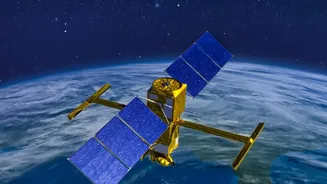
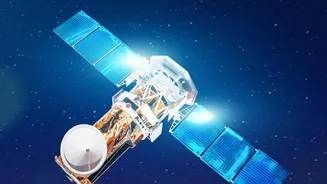
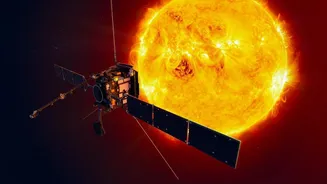
Forecasting this 'space weather' is notoriously difficult. Currently, agencies like NOAA's Space Weather Prediction Center (SWPC) monitor the Sun using a network of satellites and ground-based telescopes. They watch for tell-tale signs like sunspots, which are areas of intense magnetic activity that often precede eruptions. Satellites stationed between the Sun and Earth, like the DSCOVR satellite, can directly measure the solar wind. However, this provides a very short lead time. For the most severe events, operators of critical infrastructure might only get a 10- to 20-minute warning before the storm's full impact arrives. While this is better than nothing, it leaves little time for complex preventative measures needed to protect sprawling power grids or sensitive satellite constellations.
Artificial Intelligence as a New Watchtower
This is where artificial intelligence comes in. The sheer volume of data collected about the Sun is immense, and AI, specifically deep learning models, can analyze this information far faster than humans, identifying subtle patterns that might signal an impending storm. Several research initiatives are exploring this potential. One of the most promising is a model called DAGGER (Deep Learning Geomagnetic Perturbation). Developed through a public-private partnership including NASA, this AI system analyzes real-time measurements of the solar wind from spacecraft. By correlating this data with measurements from ground stations across the globe, it learns the complex relationship between solar wind conditions and their specific geomagnetic effects on Earth.
The Power of a 30-Minute Warning
The key benefit of a model like DAGGER is its ability to provide a fast and accurate global forecast with a 30-minute advance warning. This may not sound like a lot, but in the world of infrastructure management, it's a significant improvement. This extra time allows power grid operators to take protective measures to stabilize their systems and prevent cascading failures. Satellite operators can put their spacecraft into a safe mode or adjust their orbits to reduce drag from the expanding atmosphere. For aviation, it allows airlines to reroute polar flights, which are more exposed to communication blackouts and increased radiation during solar storms. In essence, AI could help shift the response from reactive damage control to proactive mitigation.
The Road Ahead is Still Under Construction
Despite its promise, AI is not yet a perfect shield against solar storms. These models are only as good as the data they are trained on, and a major challenge is the relative rarity of extreme storm events. This data imbalance can make it difficult for an AI to learn how to predict the most dangerous, once-in-a-century occurrences. Furthermore, gaps in our satellite coverage mean that the models sometimes operate with incomplete information. Improving these systems requires continued investment in both AI research and our space-based observation infrastructure. The goal is to build a robust, reliable system that can act like a global siren for space weather, giving everyone from engineers to astronauts the crucial time they need to prepare for the Sun's next outburst.