

Why the Moon's South Pole?
For decades, the Moon was considered a dry, barren world. But recent discoveries have confirmed the presence of water, particularly in the form of ice located in permanently shadowed regions (PSRs) at the lunar poles. These craters haven't seen sunlight
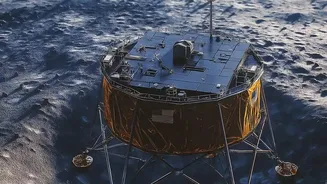
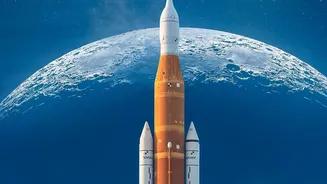
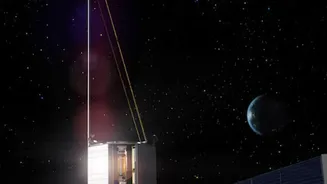
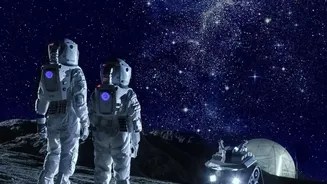
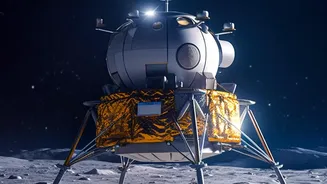
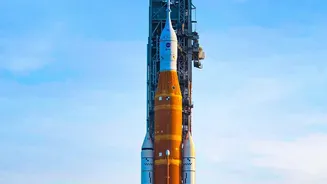
in billions of years, creating 'cold traps' with temperatures low enough to preserve ice. The lunar south pole is a prime target for this reason, and it's no coincidence that both NASA's Artemis III mission and India's successful Chandrayaan-3 landing targeted this valuable real estate. NASA has identified nine potential landing regions for its first crewed landing in over 50 years, all situated near the south pole to study this unique environment.
More Than Just a Drink
The existence of lunar water is a game-changer for space exploration, and not just for astronaut survival. While providing drinking water and breathable air is crucial, the true value of water lies in its components: hydrogen and oxygen. Through a process called electrolysis, water (H₂O) can be split into these two elements, which are the primary components of rocket propellant. Every kilogram of material launched from Earth is incredibly expensive. Manufacturing rocket fuel on the Moon—a concept known as in-situ resource utilization (ISRU)—would drastically reduce the cost and complexity of deep space missions. It effectively turns the Moon into a cosmic refueling station, making sustained lunar operations and future crewed missions to Mars far more feasible.
The Tools for a Cosmic Job
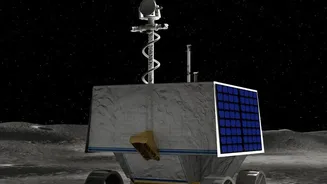
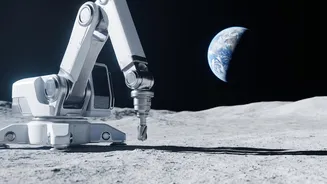
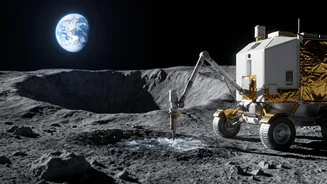
So, how will NASA and its partners actually get the water? The process involves several complex steps: prospecting, drilling, and extraction. First, missions will need to map the ice deposits precisely. NASA is contributing an instrument called the Neutron Spectrometer System to a joint mission with Japan and India to hunt for hydrogen signatures below the surface. Once located, robotic systems must drill into the frozen lunar soil, or regolith. The Polar Resources Ice Mining Experiment-1 (PRIME-1), for instance, pairs a drill called TRIDENT with a mass spectrometer (MSolo) to dig into the surface and analyze the composition of the material it brings up. New concepts are also being developed, such as pneumatic drills that use compressed air instead of hydraulic fluids that can freeze in the extreme cold. Another experimental approach involves using seismic waves generated by a rover's drill to detect hidden ice deposits.
From Icy Regolith to Liquid Gold
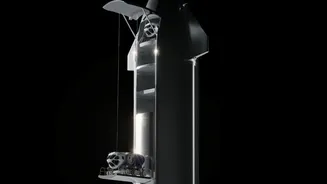
After drilling, the icy regolith must be heated to release the water. This involves collecting the soil in a container, heating it to turn the ice into vapor, and then capturing and condensing that vapor back into liquid water. However, this water isn't immediately ready to drink. It's mixed with lunar dust and other minerals, requiring a purification process. Various technologies are being explored for this, from using mirrors to concentrate sunlight for boiling, to using ultrasound waves to purify the water. While the concentration of water in the regolith is still uncertain—estimates range from 1% to over 10% by weight—even a small percentage could yield significant amounts of water, oxygen, and fuel, laying the foundation for a true lunar economy.