

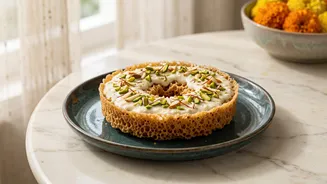
Odisha’s Chhena Poda
Often called an Indian cheesecake, Chhena Poda is a sensational dessert from Odisha. Its name translates to “burnt cheese,” which points to its beautifully caramelized crust. The magic lies in its simplicity: fresh, moist paneer (chhena) is mixed with
sugar, a little semolina (suji) for texture, and a hint of cardamom, then baked until golden brown. The process is surprisingly straightforward for such a sophisticated sweet. You simply knead the fresh chhena until smooth, combine it with the other ingredients, and bake. Some home cooks even use a pressure cooker or a microwave to achieve the signature baked texture. The result is a slightly grainy, moist, and utterly delicious sweet that offers a unique taste experience.
Goa’s Patoleo
Aromatic and wonderfully unique, Patoleo is a Goan delicacy traditionally made during monsoons and festive occasions. This sweet involves steaming a filling of fresh grated coconut and jaggery inside fresh turmeric leaves. The process is more about assembly than complex cooking. A smooth paste is made from rice flour and water, which is then spread thinly onto a turmeric leaf. A spoonful of the coconut-jaggery mixture is placed in the center, the leaf is folded, and then it's steamed for about 20 minutes. The heat releases the incredible aroma of the turmeric leaf, infusing the sweet rice cake inside with a subtle, earthy fragrance that is impossible to replicate. It's a light, healthy, and rustic sweet that truly stands out.
Hyderabad’s Qubani ka Meetha
This luxurious dessert from Hyderabad is deceptively easy to prepare. Qubani ka Meetha is essentially a rich compote made from dried apricots. The most time-consuming part is soaking the apricots until they are plump and soft, which can be done overnight. Once soaked, the apricots are gently cooked with sugar until they reach a jam-like consistency. That's it. The dish is incredibly versatile; it can be served warm or chilled, and is often topped with fresh cream, vanilla ice cream, or the apricot kernels themselves, which resemble small almonds once cracked open. Its elegant appearance and rich, fruity flavour make it seem like a complicated affair, but it’s one of the simplest festive desserts you can make.
Rajasthan’s Gond ke Ladoo
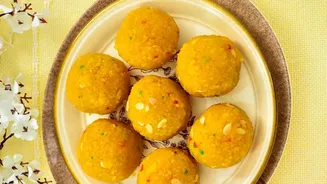
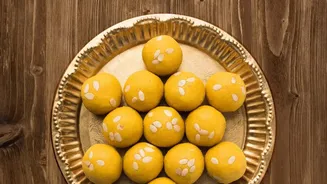
While often associated with winter for their warming properties, Gond ke Ladoos are a nutritious and energy-boosting treat perfect for any celebration. The key ingredient is gond, or edible gum, which is fried in ghee until it puffs up like popcorn. This puffed gond is then crushed and mixed with roasted whole wheat flour (atta), powdered sugar or jaggery, and a generous amount of nuts like almonds and cashews. The entire mixture is bound together with more ghee and rolled into ladoos. Though it involves a few steps like frying the gond and roasting the flour, the process is simple to follow and results in a wonderfully crunchy, wholesome sweet.
Gujarat’s Mohanthal
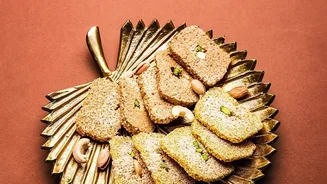
Mohanthal is a dense, fudgy sweet from Gujarat made with gram flour (besan). While traditional recipes can be quite involved, quicker versions make this regional classic accessible to home cooks. A simple method involves roasting besan in ghee until it turns aromatic and golden brown. Instead of preparing a complex sugar syrup, using condensed milk can significantly shorten the process, giving the Mohanthal a chewy, caramel-like texture. After roasting the besan, you simply stir in condensed milk and cook until the mixture thickens and pulls away from the sides of the pan. Poured into a tray and garnished with nuts, it sets into a rich, grainy, and decadent barfi that melts in your mouth.