




The High Cost of Trash in Space
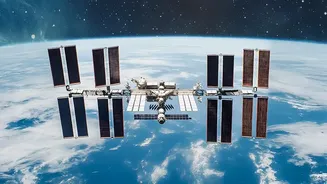
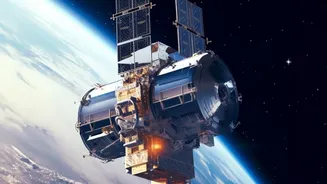
On the International Space Station (ISS), waste management is a matter of logistics and resupply. Astronauts collect everything from food packaging and used clothing to human waste, compact it, and store it in bags. When a cargo vehicle arrives with fresh
supplies, it is later filled with this accumulated trash and jettisoned, burning up harmlessly in Earth's atmosphere. This system, while effective for a station in low-Earth orbit, is completely unsustainable for missions deeper into space. A three-year round trip to Mars would generate thousands of kilograms of waste. Every kilogram of mass launched from Earth is incredibly expensive, and there is no resupply vehicle to meet astronauts halfway to Mars. Simply storing the waste onboard takes up valuable space and can pose health risks.
From Waste to Resource
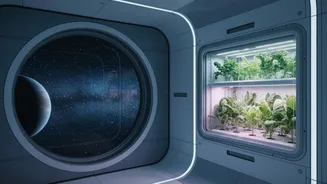
The solution requires a fundamental shift in thinking: in space, there is no such thing as 'away'. Every item, from a plastic bag to a drop of urine, must be seen not as waste, but as a potential resource. This is the core principle behind the next generation of life support systems. Agencies like NASA and the European Space Agency (ESA) are heavily investing in creating 'closed-loop' systems that can recycle and repurpose virtually everything. The goal is to dramatically reduce the mass that needs to be launched from Earth, making long-duration missions to the Moon and Mars feasible and sustainable. This drive for self-sufficiency is what makes recycling innovation a mission-critical technology.
Innovations on the Horizon
Several groundbreaking technologies are being developed to turn this vision into reality. One key area is converting trash into usable gases. Systems like NASA's Orbital Syngas Commodity Augmentation Reactor (OSCAR) use high temperatures to break down trash—including packaging, clothes, and human waste—into water and a mixture of gases. This 'syngas' can then be vented safely or even used to create propellant. Another major innovation is advanced 3D printing. The Refabricator, tested on the ISS, is a device that can recycle plastic waste and turn it into new filament for the 3D printer. This allows astronauts to manufacture tools, spare parts, or utensils on demand from used materials, reducing the need to carry countless spares. Furthermore, ESA's Advanced Closed Loop System (ACLS) is already on the ISS, capturing carbon dioxide exhaled by the crew and converting it back into breathable oxygen, saving hundreds of liters of water from being launched from Earth each year.
Enabling Deep Space Autonomy
Ultimately, these recycling systems are about more than just managing garbage; they are about enabling autonomy. For a crew on Mars, a broken component can't be replaced with a delivery from Earth. The ability to recycle materials and manufacture what is needed on-site is essential for survival and mission success. These technologies provide a level of self-sufficiency that is impossible with today's open-loop systems. By closing the loop on water, oxygen, and materials, we reduce the reliance on Earth and give astronauts the tools they need to operate independently for years at a time. This transition from a supply-chain-dependent model to a self-reliant, circular one is perhaps the most crucial step in establishing a long-term human presence beyond our home planet.
The Earthly Benefits
The push for total recycling in the extreme environment of space has powerful implications back on Earth. The challenges of waste management on the Moon and Mars are forcing engineers to create hyper-efficient, waterless, and compact recycling systems. These innovations could inspire new solutions for waste management in remote communities, disaster zones, or even in our own cities. Technologies developed to clean plastics without water or turn organic waste into fuel could accelerate our own transition to a more circular economy. In solving the problems of living sustainably on another world, we may well discover powerful new ways to live more sustainably on our own.