


Mix Up Orientations
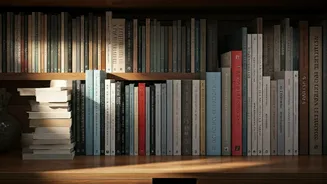
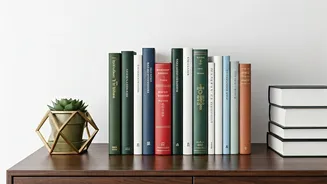
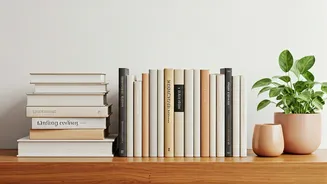
The simplest way to break free from a monotonous, library-like look is to vary the way you place your books. While vertical rows are standard, they can look rigid. Introduce dynamism by stacking some books horizontally. These horizontal stacks not only
create visual interest by breaking up the vertical lines, but they also serve a practical purpose. They become small pedestals for decorative objects, like a small plant, a framed photo, or a scented candle. This layering effect adds depth and a curated feel to your shelves, making them look far more intentional and professionally styled.
Organise by Colour
A colour-coded bookshelf is a guaranteed conversation starter. This technique involves arranging your books based on the colour of their spines. You can create a vibrant rainbow gradient that flows across the shelf, or you can group books into distinct colour blocks. For a more subtle and sophisticated look, consider a monochromatic scheme using shades of white, cream, and grey. While some book purists might argue against organising by colour instead of genre or author, the aesthetic impact is undeniable. It transforms your book collection into a single, cohesive piece of art that can tie the entire room's colour palette together.
Incorporate Meaningful Objects
A bookshelf should tell a story about you, and that story isn't just about the books you read. Weave personal items in between your volumes to create meaningful vignettes. Place a small vase you picked up on your travels next to a stack of travel guides. Position a framed family photo leaning against a set of classic novels. Small sculptures, interesting rocks, or even a beautiful ceramic bowl can break up the monotony of book spines and add texture. These objects infuse your shelves with personality and memories, turning a simple storage unit into a personal museum of your life and interests.
Embrace the Rule of Odds
In design, there's a well-known guideline called the 'rule of odds,' which states that arrangements of objects in odd numbers (three, five, or seven) are more visually appealing and dynamic than even-numbered groupings. Apply this to your shelves. Instead of placing two identical bookends, try grouping a stack of three books with a single, larger decorative object. Create a small cluster of five items—for instance, two horizontal books, one vertical one, a plant, and a small picture frame. This asymmetry feels more natural and less forced, encouraging the eye to move around and explore the display.
Face a Few Favourites Outward
Think like a bookseller and use your book covers as art. Most books are shelved with only their spines showing, but many have beautiful, compelling cover designs. Select a few of your most visually striking books and turn them to face outward. You can lean them against the back of the shelf or use a small, clear stand to prop them up. This technique is perfect for creating a focal point, especially on deeper shelves. It adds an artistic, gallery-like quality and allows you to showcase the books you truly love, not just store them.
Give Your Books Breathing Room
Perhaps the most overlooked rule of styling is the importance of negative space. A shelf crammed with books from end to end can feel heavy, cluttered, and overwhelming. To achieve a curated, high-end look, you need to edit. Don't be afraid to leave some empty space. This breathing room allows each object or book grouping to stand out and be appreciated on its own. It signals intentionality and confidence in your choices. If you have too many books for your current shelves, consider it an opportunity to store some away and rotate your display seasonally, keeping your decor fresh and dynamic.