




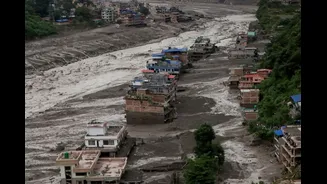

A Torrent Originating Upstream
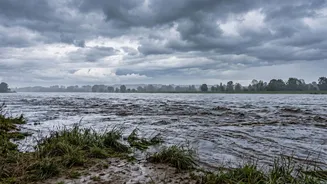
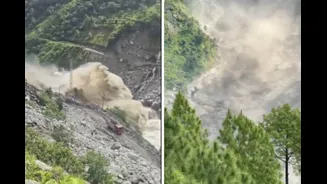
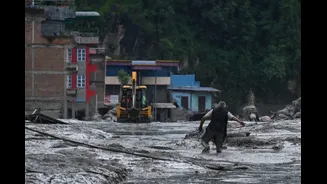
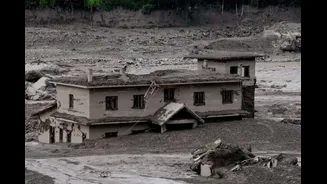
The immediate cause for concern is a massive flash flood that swept through northern and central Nepal, originating from heavy rains and a possible glacial lake outburst in the Tibet region. This surge of water entered the Bhote Koshi river, a tributary
that feeds into the Trishuli and then the Narayani river system in Nepal. The Narayani is the same river that becomes the mighty Gandak upon entering Indian territory in Bihar, creating a direct and dangerous hydrological link between the two countries. The sheer volume of water moving downstream from Nepal has put Indian authorities on high alert.
The Gandak: A Transboundary Challenge
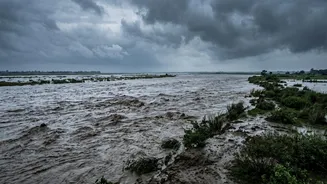
The Gandak river is a crucial water source for a vast agricultural belt in both Nepal and India, but its transboundary nature also makes it a conduit for floodwaters. When heavy monsoon rains or flash floods occur in its upper catchment areas in Nepal, the impact is inevitably felt downstream in Bihar. Six districts in the state are particularly vulnerable: West Champaran, East Champaran, Gopalganj, Saran, Muzaffarpur, and Vaishali. Authorities in other districts like Sitamarhi and Sheohar have also been directed to maintain heightened vigilance. For the millions living in these low-lying areas, the river's swell is a direct threat to their homes, crops, and livelihoods.
Valmikinagar Barrage: The First Line of Defence
The primary tool for managing this deluge is the Gandak Barrage at Valmikinagar in West Champaran, right at the India-Nepal border. In response to the incoming floodwaters, authorities took the critical step of opening all 36 gates of the barrage. This action is designed to regulate the massive flow of water and prevent a catastrophic build-up of pressure that could breach embankments. On Wednesday, the discharge from the barrage peaked at around 1.50 lakh cusecs. While officials noted this was below the record levels seen in previous years, the situation requires continuous, round-the-clock monitoring by engineering teams deployed on site.
Potential Impact on Life and Livelihood
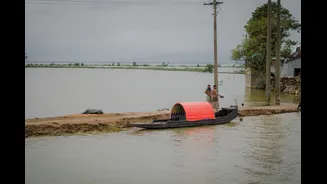
A severe flood in the Gandak basin could have far-reaching consequences. The immediate risk is the inundation of villages and towns, forcing the large-scale evacuation of residents. District administrations have been instructed to keep evacuation plans, shelters, and community kitchens ready. Beyond the immediate human displacement, there is a major threat to the region's agriculture. The fertile plains along the Gandak are hubs for paddy and sugarcane cultivation, and a major flood could wipe out standing crops, leading to huge economic losses for farmers. Furthermore, critical infrastructure like roads, bridges, and power lines are at risk of being damaged or washed away, which would disrupt daily life and hamper rescue efforts.
An All-Out Official Response
Recognizing the gravity of the threat, the Bihar state government has activated a multi-level response. Chief Minister Samrat Chaudhary and Chief Secretary Pratyaya Amrit held high-level review meetings to coordinate efforts. The National Disaster Response Force (NDRF) has been mobilized, with teams deployed to vulnerable districts like Gopalganj, West Champaran, and Muzaffarpur. The Sashastra Seema Bal (SSB) has also been roped in to provide support. At the central level, Union Home Minister Amit Shah spoke with the Chief Minister, assuring all possible assistance from the Centre to tackle the emerging situation. Public address systems are being used to warn residents in low-lying areas, urging them to move to safer locations as a precautionary measure.