







A National Shortfall
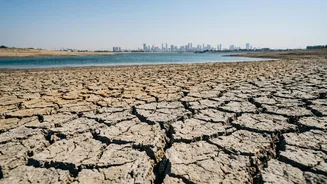
The numbers paint a stark picture. According to the Central Water Commission (CWC), as of late September 2026, the water stored in 178 of India's major reservoirs was at 70% of total capacity. This is significantly below the ten-year average of about
77% and lower than the 79% recorded at the same time in 2025. The primary cause is a deficient southwest monsoon, which accounts for over 70% of India's annual rainfall and is crucial for replenishing water sources. This year, cumulative rainfall was about 12% below normal, a deficit linked to the El Niño phenomenon.
Southern Cities on the Frontline
The situation is particularly dire in southern India, where reservoirs are at just 50% of their capacity—a dramatic drop from 87% the previous year. This region, encompassing states like Karnataka, Tamil Nadu, and Andhra Pradesh, saw a rainfall deficit of 23%. The implications for major urban hubs like Bengaluru and Chennai, which have historically faced 'Day Zero' scenarios and severe water stress, are profound. Bengaluru, for instance, has struggled with the depletion of its lakes and groundwater, importing water from over 100 kilometers away. Similarly, cities like Delhi, Hyderabad, and Jaipur are also identified as facing high water stress due to a combination of population growth, groundwater depletion, and reliance on monsoon-fed sources.
The Urban Strain
Cities feel the pinch of water scarcity more acutely due to unique pressures. Rapid urbanization, high population density, and aging, leaky infrastructure all contribute to a fragile system. Many cities depend on water transported from distant reservoirs, making them vulnerable to regional shortages. When these supplies dwindle, the consequences ripple through the urban ecosystem. Beyond the inconvenience of water cuts, shortages can impact public health, disrupt industrial production, and create social friction as residents compete for limited resources, often relying on expensive private water tankers. The recurring cycle of shortages in major Indian cities indicates a systemic governance challenge, not just a seasonal one.
Conservation is No Longer a Choice
With dam levels low and the dry season ahead, the focus must shift decisively towards demand management and conservation. Experts argue that Indian cities have historically prioritized finding new water supplies rather than managing what they already have. Fixing leaky pipes, regulating groundwater extraction, and treating and reusing wastewater are critical long-term strategies. However, immediate and widespread public participation in conservation is essential to navigate the coming months. This means making water conservation a household-level priority, driven by the understanding that every drop saved contributes to collective water security.
Simple Steps for a Big Impact
For urban residents, contributing to water conservation doesn't require drastic measures. Simple, consistent habits can collectively save millions of litres. Start by fixing all leaky taps and pipes at home. A single dripping tap can waste thousands of litres a year. Opt for shorter showers and turn off the tap while brushing teeth or washing hands. When possible, use water-efficient appliances. In the kitchen, reuse water from washing vegetables to water plants. Many buildings are now mandated to have rainwater harvesting systems; ensuring these are functional can help recharge groundwater and provide water for non-potable uses like cleaning cars or flushing toilets. These small acts, when adopted by millions, can significantly reduce the strain on overburdened urban water systems.