


The Primary Goal: A Precious Return
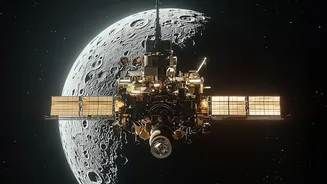
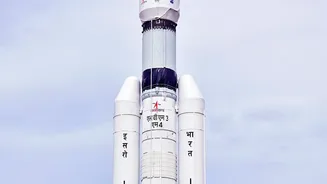
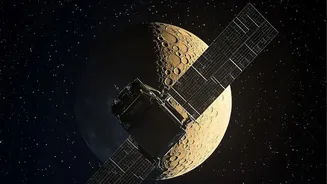
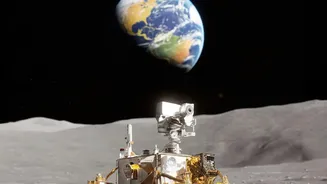
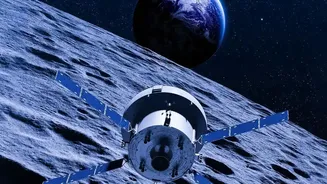
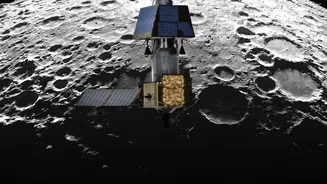
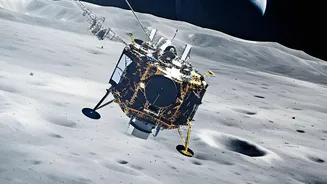
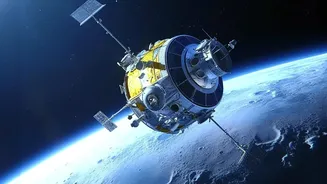
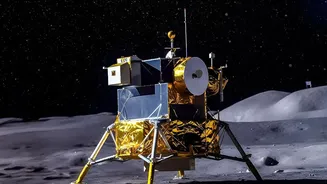
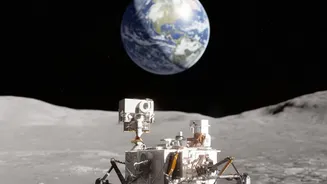
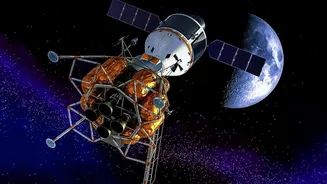
Chandrayaan-4 is designed as a lunar sample-return mission, an incredibly complex task only a handful of nations have ever attempted. The mission aims to land near the Moon's south pole, collect up to three kilograms of soil (regolith) and potential water
ice, and bring it all back to Earth for analysis. This is a significant leap from previous missions, requiring multiple spacecraft modules for landing, collecting, ascending from the lunar surface, docking in orbit, and returning home. If successful, India will join an exclusive club of nations to have brought back materials from the Moon, providing pristine samples that are crucial for scientific breakthroughs.
Unlocking the Secrets of Lunar Water Ice
The mission's focus on the south pole is strategic. This region contains permanently shadowed regions (PSRs), craters so cold they have likely preserved water ice for billions of years. This ice is a scientific goldmine. Analysis on Earth can reveal its origins—whether it was delivered by comets and asteroids or sourced from lunar volcanoes. This provides a window into the history of our solar system and the origins of water on Earth. For global space agencies, this is a critical question. The presence and composition of this ancient ice will inform dozens of future missions and our understanding of how volatile materials are distributed across space.
Fueling the Future of Space Exploration
The benefits of lunar ice extend far beyond scientific curiosity. Water is a cornerstone of what scientists call In-Situ Resource Utilisation (ISRU)—the idea of 'living off the land' in space. Water can be used for life support for astronauts, providing drinking water and breathable oxygen through electrolysis. Crucially, its components, hydrogen and oxygen, are the primary ingredients for rocket propellant. Having a ready source of water on the Moon could transform it into a refuelling station for deeper space missions, including voyages to Mars. By bringing back samples, Chandrayaan-4 will provide the ground truth needed to design the technology for extracting and processing this vital resource, benefiting programs like NASA's Artemis which aim to establish a sustained human presence on the Moon.
Reading History in the Lunar Soil
Beyond ice, the lunar regolith itself is a treasure trove of information. The Moon's surface is an ancient record-keeper, bombarded by solar wind and micrometeorites for eons without the geological recycling or weather that erases such history on Earth. Samples returned by Chandrayaan-4 will allow scientists worldwide to study the Sun's history and the flux of particles in our solar system. Furthermore, lunar soil could hold clues about the early Earth, as material ejected from our planet by ancient asteroid impacts may be preserved on the Moon. Detailed analysis in labs on Earth, with instruments far more powerful than any sent to space, is the only way to unlock these secrets.
A Catalyst for Global Collaboration
While a national achievement, Chandrayaan-4's success will have a global ripple effect. India's participation in the Artemis Accords and its deepening space partnership with the US mean that the data and samples from this mission will likely become part of a worldwide scientific effort. Recently, NASA invited ISRO to join its Moon Base program, which aims to build a permanent outpost near the lunar south pole. The knowledge gained from Chandrayaan-4—from the composition of ice to the geotechnical properties of the soil for construction—will be invaluable for this international project. By proving the technologies for sample return and providing key data on resources, India is not just exploring the Moon for itself, but helping to pave the way for a new, collaborative era of human space exploration.