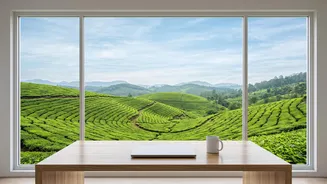







The Rise of the ‘Workation’
The line between the office desk and the holiday destination has blurred into a new concept: the 'workation'. It’s a travel style where professionals work remotely from a scenic or relaxing location, effectively blending their job with a vacation. Instead
of taking a complete break for a week, they might relocate to the mountains or a beach for a month, keeping their work hours and exploring in their downtime. This trend, also known as 'bleisure' when personal travel is added to a business trip, is driven by the widespread adoption of remote and hybrid work models. Factors like escaping urban burnout, better internet connectivity in remote areas, and a desire for a better work-life balance are fuelling this shift.
A New Itinerary for Modern Professionals
A 'workation' looks very different from a traditional holiday. It's less about cramming activities into a few days off and more about integrating into a new environment for a few weeks or even months. Professionals work their regular hours, perhaps from a café in Goa or a homestay in Himachal Pradesh, and use evenings and weekends for leisure and exploration. In response, the hospitality industry has adapted, with hotels, resorts, and homestays now offering work-friendly amenities. These include reliable high-speed Wi-Fi, comfortable workspaces, and power backup to ensure productivity isn't interrupted. Some destinations have gone even further; in 2025, Yakten in Sikkim was established as India's first 'digital nomad village' to cater specifically to this crowd.
The Allure of Blended Travel
For employees, the benefits are clear. A change of scenery is reported to boost productivity and reduce the stress and monotony that can come from a static home office. It allows for travel and new experiences without depleting annual leave, offering a sustainable way to achieve a better work-life balance. Employers are also seeing advantages. Companies with flexible remote work policies, including giants like TCS and Infosys, find it can lead to higher employee satisfaction and retention. A recent survey noted that 77% of Indian business travellers in the Asia-Pacific region now extend their work trips for leisure, the highest rate in the region, indicating a strong desire for this blend.
The Downside of the Always-On Holiday
However, this new freedom has a potential dark side. The biggest challenge of a workation is the blurring of boundaries between professional and personal life. When your vacation spot is also your office, it can be difficult to truly disconnect, leading to a feeling of being 'always on'. This can result in overwork and burnout, defeating the purpose of a relaxing getaway. There’s also the risk of being less productive due to the distractions of a new and exciting location. The constant pressure to be available for work can prevent the genuine mental and physical recovery that a traditional, fully disconnected holiday provides. Experts note that the benefits of a break often fade quickly upon returning to work, and if you never truly leave work behind, those benefits might not materialize at all.