



When a thick blanket of smog descends, the instinct is to shut the doors and wait it out. But is the air inside your home truly safe? With a dizzying array of products promising clean air, it's hard to know what actually works.
The Gold Standard: HEPA Air Purifiers
This is the one that really
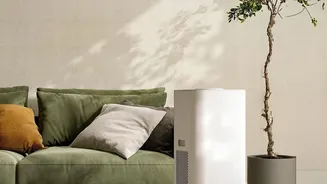
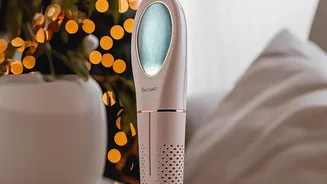
works. High-Efficiency Particulate Air (HEPA) filters are the benchmark for cleaning indoor air, and the science backs them up. True HEPA filters are certified to capture at least 99.97% of airborne particles that are 0.3 microns in size — a size considered the most difficult to trap. This makes them highly effective against the dangerous PM2.5 particles that define smog and can penetrate deep into the lungs. Studies have consistently shown that using a portable HEPA purifier can significantly reduce indoor PM2.5 levels. One real-world study found that HEPA cleaners reduced indoor PM2.5 concentration by nearly half. For even better performance, some purifiers also include an activated carbon filter, which helps remove odours and volatile organic compounds (VOCs) that HEPA filters alone can't trap. When buying one, look for the 'True HEPA' label and check its Clean Air Delivery Rate (CADR), which tells you how quickly it can clean a room of a specific size.
The Myth: A Jungle of Houseplants
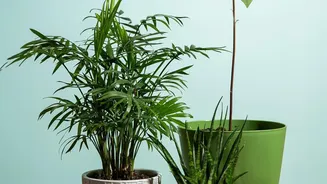
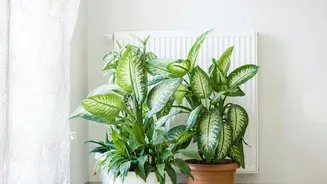
The idea that houseplants can purify indoor air is a persistent one, largely thanks to a famous 1989 NASA study. The study showed that, in a sealed laboratory chamber, plants could indeed remove VOCs like formaldehyde and benzene from the air. However, your home is not a sealed lab. Subsequent reviews and analysis have put this into perspective: to achieve a meaningful air-cleaning effect in a typical home or office, you would need an enormous number of plants — somewhere between 10 and 1,000 plants per square meter of floor space. In a normal room, the natural ventilation and air exchange rates do far more to clear pollutants than a few potted plants can. While plants are wonderful for mental well-being and aesthetics, and do absorb tiny amounts of pollutants, they are not an effective strategy for protecting yourself during a severe smog event.
The Buzz: Salt Lamps and Beeswax Candles
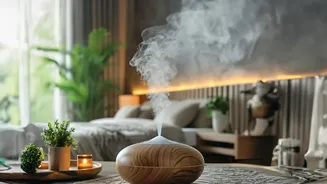
Himalayan salt lamps and beeswax candles are often marketed with claims of air purification, typically involving the release of 'negative ions'. The theory is that these ions attach to airborne pollutants and make them fall out of the air. Unfortunately, there is no robust scientific evidence to support this claim for either product. While salt is hygroscopic (it attracts water), the amount of moisture and pollutants a lamp could passively trap from the air is negligible. Studies have also found that salt lamps produce a vanishingly small amount of negative ions, not nearly enough to have any effect. Similarly, while pure beeswax candles burn more cleanly and release fewer particulates than paraffin candles, the idea that they actively purify the air is unproven. Their primary benefit is that they don't add pollutants to the air, unlike their petroleum-based counterparts, rather than removing existing ones.
The Foundation: Seal Your Space
Before you even consider a purifier, the most critical step is to stop outdoor pollution from getting in. During a severe smog event, tiny particles can easily infiltrate buildings through gaps in windows and doors. Keeping windows and doors shut is the obvious first step. For a better seal, consider applying weather stripping tape around frames and using door sweeps to block the gap at the bottom. This is a low-cost, highly effective way to reduce the amount of polluted air entering your home. If you have an air conditioner, set it to 'recirculate' mode to avoid pulling in smoky air from outside. It’s also wise to limit the use of kitchen and bathroom exhaust fans, which can pull polluted air into the house from the outside.