




More Than Just a Lack of Rain
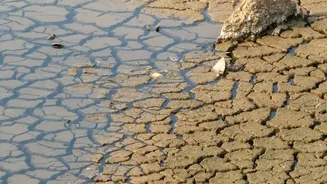
A monsoon 'dry spell' isn't just a day or two without clouds. It's a prolonged break in rainfall that occurs during the critical four-month season from June to September. After initial rains prompt farmers to sow their fields, a sudden and extended dry period
can be catastrophic. The India Meteorological Department (IMD) often declares a dry spell when rainfall is deficient for a significant period. These breaks disrupt the lifecycle of rain-fed crops, which constitute nearly half of India's cultivated land and are entirely dependent on the monsoon's performance. The 2026 season has already highlighted this vulnerability, with a weak start in June followed by a recovery in July, but forecasts for August and September indicate a return to below-normal rainfall, raising alarms across the country's agricultural heartlands.
Why Timing Is Everything for Crops
The impact of a dry spell depends heavily on its timing. Different crops have different vulnerabilities at various stages of their growth. For paddy (rice), which saw sowing lag by 3.7% this year as of mid-August, dry spells are particularly damaging during the transplanting and tillering phases, when water is essential for the plant to establish itself. For other major Kharif crops like soybean and maize, the reproductive stage—flowering, pod formation, and grain filling—is the most critical. Moisture stress during this August-September window can lead to fewer grains per plant, smaller grain size, and ultimately, a significant drop in yield. With many districts that are major producers of soybean, rice, and tur (pigeon pea) already facing rainfall deficits in 2026, the risk to final output is considerable.
The 2026 Monsoon's Erratic Journey
The 2026 monsoon has been a story of extremes. After a significant deficit in June, active weather systems in July helped narrow the gap, allowing farmers to catch up on sowing. However, the national rainfall deficit remains stuck at around 12% as of mid-August. The real concern lies in the regional distribution. States like Bihar, Punjab, and Jharkhand are facing deficits of over 25%, while key southern states like Karnataka and Kerala are also significantly behind normal. This unevenness means that while some regions might have adequate moisture, others face drought-like conditions. Experts warn that a few days of heavy rain cannot compensate for a long dry spell, as soil moisture quickly depletes, especially with the higher-than-normal temperatures also being forecast.
The Economic Ripple Effect
The consequences of a poor Kharif harvest extend far beyond the farm gate. A drop in agricultural production directly hits farmer incomes, which in turn dampens rural demand for goods like two-wheelers, tractors, and other consumer products. This creates a drag on the wider economy. Furthermore, lower crop yields can lead to food inflation, as the supply of essential commodities like pulses, edible oils, and vegetables tightens. The Reserve Bank of India has repeatedly flagged a deficient monsoon as a key risk to the country's growth and inflation targets. While India has built buffers like large foodgrain stocks and improved irrigation over the years, a significant rainfall deficit can still act as a macroeconomic shock, influencing everything from rural credit to monetary policy.
Mitigation and Looking Ahead
In response to the threat of a weak monsoon influenced by El Niño, the government has prepared contingency plans for over 300 districts identified as being at risk. These plans involve promoting the use of short-duration, drought-tolerant crop varieties and encouraging crop diversification to hedge against the failure of a single primary crop. Advisories have been issued to conserve water and use it judiciously. For farmers, strategies like inter-cropping and ensuring they have access to information on alternative crops are crucial. While these measures can help cushion the blow, the long-term solution lies in building greater climate resilience into Indian agriculture. As monsoon patterns become more erratic, the ability to adapt to these unpredictable dry spells will be the key to ensuring food security and economic stability in the years to come.