


What Is the New UPI Fee?
The new charge is a Merchant Discount Rate, or MDR, and it's not a blanket fee on all UPI transactions. The National Payments Corporation of India (NPCI) has introduced a 0.4% MDR specifically for person-to-merchant (P2M) payments that are over ₹2,000.
This means it only applies when a customer pays a business, and only if the single transaction amount is above the ₹2,000 threshold. Importantly, this fee is paid by the merchant, not the customer, and the government has advised banks to ensure businesses do not pass this cost on to consumers. For very large transactions of ₹75,000 or more, the fee is capped at ₹300.
The Crucial Exemptions for Small Sellers
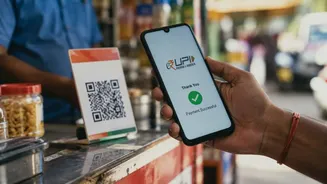
The headline's promise holds true thanks to specific, targeted exemptions designed to protect small businesses. The most significant is that transactions of ₹2,000 or less are completely exempt from this new MDR. Since the vast majority of daily retail transactions fall under this amount, most payments at local shops will not be affected. Furthermore, there is a crucial classification for small merchants. Those categorized as Person-to-Person Merchant (P2PM) who receive up to ₹1 lakh per month through UPI QR codes are entirely exempt from the MDR, regardless of the transaction size. This policy is designed to shield street vendors and small neighbourhood stores, ensuring they can continue to benefit from digital payments without new costs.
Who Does This New Fee Actually Affect?
The 0.4% MDR is primarily aimed at larger, organised merchants who process a higher volume of big-ticket UPI transactions. Think of businesses in sectors that are not classified as essential services and regularly handle payments over ₹2,000. For instance, a customer buying an expensive electronic item, a piece of furniture, or paying for a holiday package via UPI would trigger the MDR for the merchant. According to government estimates, this new fee structure will only impact about 4% of all merchant transactions, leaving 96% unaffected. Person-to-person (P2P) transfers, like sending money to friends or family, remain completely free for everyone, regardless of the amount.
Why Was This Fee Introduced?
For years, India's UPI system operated on a zero-MDR framework, a policy that massively drove its adoption. However, operating, securing, and innovating the vast payments infrastructure incurs significant costs for banks, payment processors, and app providers. Previous government subsidies proved insufficient to cover the escalating costs of a system that now handles billions of transactions monthly. The introduction of a tiered MDR is a strategic move to create a sustainable revenue model for the payment ecosystem. The fees collected will be distributed among the various participants to support infrastructure maintenance, cybersecurity, and future development, ensuring the long-term health and reliability of UPI.
What About Special Categories?
The NPCI has also defined specific rules for certain essential sectors to keep costs low. For payments over ₹2,000 in sectors like railways, telecom, insurance, and fuel, a lower flat fee of ₹5 per transaction will apply instead of the 0.4% rate. Transactions related to the capital market, such as mutual funds and securities, will attract an even lower MDR of 0.02%, which is also capped at ₹300. These tailored rates show that the new framework is not a one-size-fits-all approach but a carefully structured policy to balance sustainability with affordability across different segments of the economy.