


Two Moons, Two Strategies
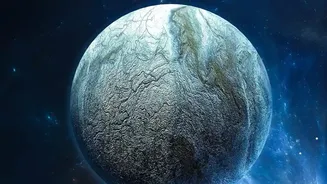
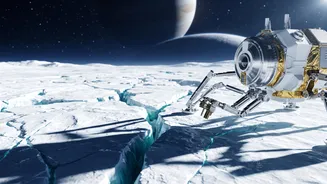
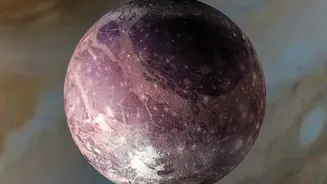
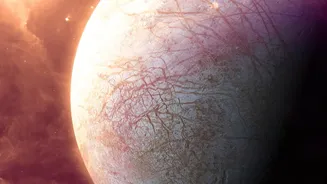
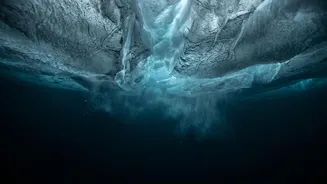
Europa and Enceladus are two of the most compelling places to search for extraterrestrial life in our solar system, but they require different approaches. Enceladus offers a tantalizing shortcut: giant plumes of water from its subsurface ocean erupt into
space through cracks in its southern pole. This provides a direct sample of the ocean's contents, allowing a spacecraft to simply fly through and 'taste' the spray. Europa is a bigger moon with a potentially much thicker ice shell, and while it might have plumes, they are not as certain or consistent. Therefore, the strategy for Europa involves a more indirect, remote investigation, scanning the moon from orbit to understand its ice shell, ocean, and surface chemistry.
Tasting the Plumes of Enceladus
For Enceladus, the key technology is a mass spectrometer. Think of it as a highly sophisticated nose or tongue. As a probe flies through the plumes, it collects ice grains and gas. Inside the spectrometer, these particles are vaporized and broken down, allowing the instrument to precisely measure the mass of the molecules within. This is crucial for identifying 'biosignatures'—complex organic molecules like amino acids or lipids that are the building blocks of life as we know it. While the Cassini mission first detected organics in these plumes, its instruments weren't designed for detailed life-detection. Future proposed missions like the Enceladus Life Finder (ELF) would carry next-generation instruments capable of telling whether these organic molecules were formed by living organisms or just non-biological chemistry.
Scanning Europa from Above
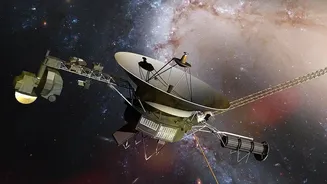
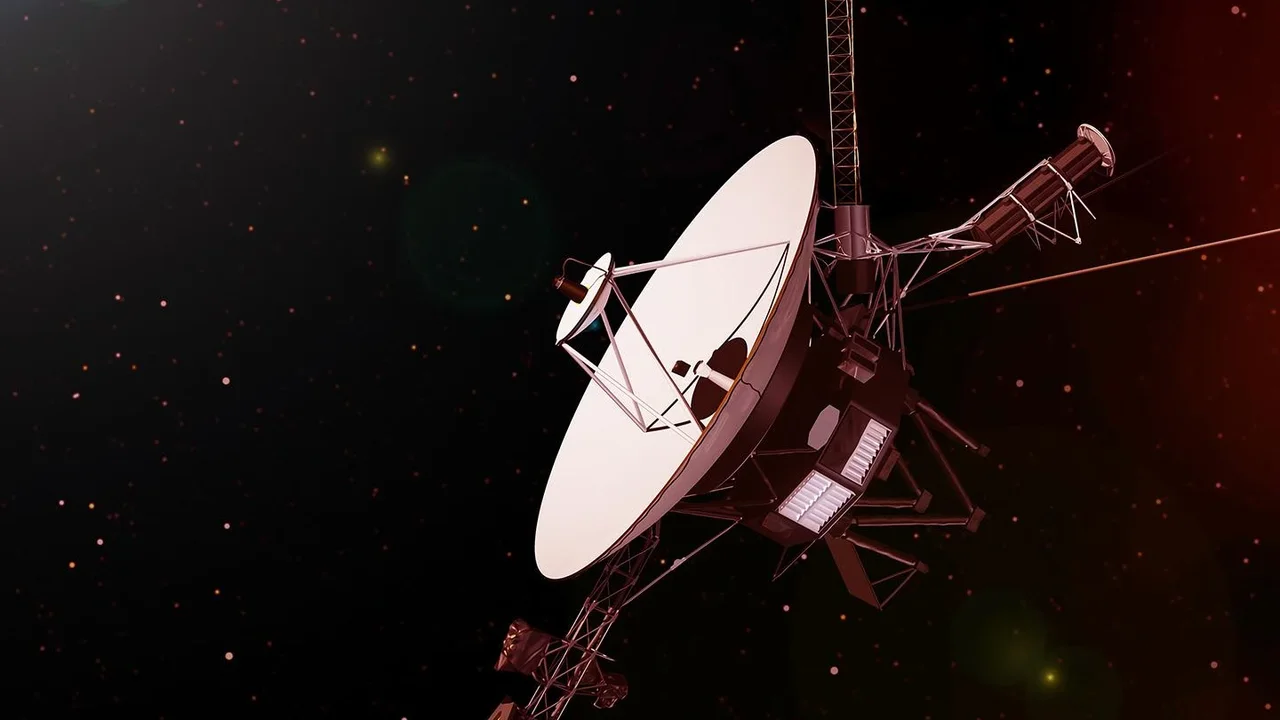
NASA’s Europa Clipper mission, which launched in October 2024 and is en route to Jupiter, is a technological marvel designed to investigate Europa without landing. It will perform dozens of close flybys beginning in 2031, using a suite of nine advanced science instruments. One of its most critical tools is an ice-penetrating radar called REASON. This instrument will bounce radio waves through the ice shell to measure its thickness and, most excitingly, search for pockets of liquid water or even confirm the global ocean's existence and depth. Another key instrument, the magnetometer, will measure the strength and direction of magnetic fields. Since salty water is a good electrical conductor, variations in the magnetic field can reveal the ocean's depth and salinity.
The Hunt for Chemical Clues
Europa Clipper is also equipped to sniff out chemical clues from a distance. Its Mapping Imaging Spectrometer (MISE) and Ultraviolet Spectrograph (Europa-UVS) will analyze the composition of the moon's surface. Material from the ocean below may get churned up and deposited on the surface over geologic time. These instruments can map the distribution of ices, salts, and organic compounds. Should Europa have plumes, two other instruments, the Mass Spectrometer for Planetary Exploration (MASPEX) and the Surface Dust Analyzer (SUDA), will be ready to analyze the ejected material, just as a mission to Enceladus would. SUDA can even detect the residue of a single ice grain containing minute traces of cellular material.
More Than Just Finding Organics
Finding organic molecules is a big step, but it’s not definitive proof of life. The key is context. Scientists are looking for specific patterns, such as a prevalence of certain types of amino acids over others, or complex lipids that are difficult to create through simple geology. The combination of data from all these instruments builds a complete picture of habitability. The radar tells us about the water, the magnetometer characterizes the ocean, and the spectrometers and dust analyzers tell us about the chemistry. It’s this multi-faceted approach, combining physics and chemistry, that provides the most robust framework for determining if these distant oceans could truly harbor life.