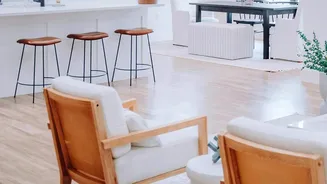








The Goal: Function Over Frills
First, let's be clear: a one-hour reset is not a deep clean. It’s not about scrubbing grout or organising your spice rack alphabetically. The guiding principle is 'function before decoration.' The aim is to get your home back to a baseline state where
it works for you. This means clearing surfaces, putting things where they belong, and making your main living areas usable again. It’s a strategic tidy-up designed for maximum impact in minimum time. This approach provides immediate relief from visual noise and makes the space feel manageable, which is often the biggest hurdle to getting started. By focusing on restoring order, you create a foundation that makes future cleaning and even decorating feel less daunting.
Why 60 Minutes is Enough
The idea of transforming your home in just an hour might seem ambitious, but it works because it's focused and realistic. Many grand cleaning plans fail because they demand too much energy and time. A one-hour reset, often called a 'Sunday Reset' or 'power hour', breaks the work into small, timed sprints. This method is particularly effective because it prevents you from getting bogged down in one area. The goal isn't 'done'; it's 'better'. Studies and anecdotal evidence show that a clean, organised space can reduce stress, improve focus, and give you a sense of control. Even a short burst of focused tidying can lower levels of the stress hormone cortisol, fostering a calmer mental state. Think of it as a mental health habit as much as a cleaning routine.
Your One-Hour Functional Reset Plan
Ready to reclaim your space? Set a timer and put on some music. The key is to keep moving and not get distracted by any single task for too long. Here’s a simple, effective breakdown:
Minutes 0-15: The High-Speed Declutter
Grab a basket or a bag and walk through your main living areas—the living room, kitchen, and entryway. Your only job is to collect everything that is out of place: stray mugs, mail, books, toys, shoes. Don't put anything away yet; just gather the clutter. This initial sweep instantly reduces visual chaos.
Minutes 16-30: The 'Put-Away' Sprint
Now, tackle the basket of collected items. Quickly return everything to its designated home. If something doesn't have a home, create one or decide to deal with it later. The goal is speed, not perfect organisation. Clear the kitchen counters and dining table first, as these are high-impact functional zones.
Minutes 31-45: The Surface Refresh
With surfaces clear, do a quick wipe-down. Focus on the most-used spots: kitchen counters, the coffee table, and bathroom sinks. This isn’t a deep scrub; it’s a quick polish that makes the space feel fresh. You can also make the beds during this time, a simple task that dramatically tidies a bedroom.
Minutes 46-60: The Floor Finale & Final Touches
Clean floors can make an entire home feel cleaner. Run a quick vacuum or sweep over high-traffic areas. Don't worry about moving heavy furniture. In the final few minutes, do a few small things that signal a 'reset' to your brain: fluff the pillows, fold any throw blankets, and maybe light a candle. Take a moment to appreciate the renewed sense of order.
Making the Reset a Lasting Habit
The true power of the one-hour reset comes from consistency. By doing it once a week, you prevent clutter and chores from piling up into an insurmountable weekend-long project. It keeps your home in a constant state of 'almost tidy,' which is far more sustainable than cycles of mess and marathon cleaning. You can even adapt this into a 15-minute daily tidy to maintain the order you've created. To avoid getting overwhelmed by bigger tasks, you can incorporate a 'focus zone' into your weekly reset. Each week, dedicate just ten minutes of your hour to a small, specific organising project, like a single junk drawer, a bathroom cabinet, or one shelf in the pantry. Over time, these small efforts add up to a much more organised home without the burnout.