





More Than Just Wallpaper
It’s easy to be cynical and dismiss a well-stocked bookshelf as a mere design choice, a kind of intellectual wallpaper for the aesthetically conscious. Some even arrange books by colour, spines turned inward, treating them as abstract objects. But to do
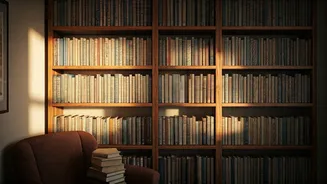
so is to miss the point entirely. Unlike a vase or a framed print, a book is not a static object. Each one is a dormant world, a container of ideas, arguments, and emotions. A room filled with books isn't just visually textured; it’s layered with potential energy. It’s a space that promises discovery and quietly hums with the collective voices of authors waiting to be heard. This potential is what separates a living library from a simple decorative feature. It’s the difference between a house and a home.
A Tangible Personal History
Your bookshelf is your autobiography, written in the choices of others. Look closely at any collection and you’ll find a personal timeline. There’s the dog-eared copy of a childhood favourite, the university textbook with frantic highlights in the margins, the travel guide from a memorable trip, the novel a friend insisted you read, and the poetry collection that got you through a tough time. These objects are not just paper and ink; they are markers of who we were, what we loved, and what we were striving to understand at different points in our lives. They tell a story of our intellectual and emotional evolution. In this sense, a bookshelf makes a home feel alive because it is a living document of the inhabitants’ journey, a physical archive of their curiosity and growth.
The Comfort of 'Tsundoku'
The Japanese have a word for the practice of acquiring reading materials but letting them pile up in one's home without reading them: 'tsundoku'. While it might sound like a symptom of hoarding, it speaks to a deeper comfort. A stack of unread books is not a sign of failure but a symbol of ambition and curiosity. It represents all the things you still want to learn, the worlds you have yet to visit, and the perspectives you have yet to encounter. This quiet promise of future discovery is a profound source of comfort. It suggests a life with endless possibilities for growth and entertainment. Living amongst these unread books is a constant, gentle reminder that there is always more to know, making the home a launchpad for intellectual adventure rather than just a place of rest.
The Ultimate Conversation Starter
When you enter someone’s home for the first time, your eyes are often drawn to their bookshelves. It’s a socially acceptable form of snooping, a quick and intimate glimpse into the mind of your host. A shared author can spark an immediate connection. An intriguing title can launch a deep conversation. Even a book you vehemently disagree with can open a fascinating debate. Books are social objects. They are signals of our interests and values, extended invitations to others to engage with us on a deeper level. A home with visible bookshelves is a home that is open to ideas and to connection. It tells guests that this is a place where thoughts are welcome and curiosity is shared, making the space feel instantly more welcoming and dynamic.
A Feast for the Senses
Beyond the intellectual and emotional weight, books offer a rich sensory experience that digital alternatives cannot replicate. There's the unique, comforting smell of old paper and ink—a phenomenon so beloved it has a name, 'bibliosmia'. There's the satisfying weight of a hardcover in your hands, the texture of the pages, and the visual variety of different covers, sizes, and fonts lining a shelf. This physical presence adds a layer of warmth and complexity to a room. The slight imperfections—a creased spine, a faded cover, a coffee stain on a page—add to the character, proving that the objects have been lived with and loved. This sensory richness grounds a space, making it feel human, imperfect, and wonderfully alive.