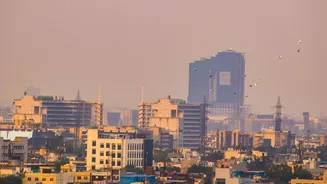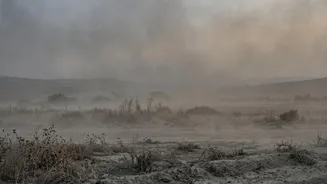








As winter approaches in North India, headlines are filled with alarming air quality numbers. This year, cities like Bikaner and Bathinda have reported staggering pollution levels, sometimes even surpassing Delhi. But what do these numbers mean?
A Tale of Two Cities' Toxic Air
In the
first week of November 2026, Rajasthan's Bikaner and Punjab's Bathinda found themselves at the top of India's most polluted cities list. On November 4, Bikaner's Air Quality Index (AQI) was reported to have reached a shocking 1,357, while Bathinda was second with an AQI of 883. For context, an AQI above 401 is considered 'Severe' or 'Hazardous', posing a serious health risk to the entire population. These figures highlight a grim reality: severe air pollution is a widespread crisis across North India, not just a problem confined to the national capital. To understand the threat, we need to look at the primary culprits behind these numbers: PM10 and PM2.5.
What is Particulate Matter?
Particulate matter, or PM, is the term for a mixture of tiny solid particles and liquid droplets suspended in the air. Think of it as a cocktail of dust, soot, smoke, and other microscopic materials. These particles are not a single chemical substance but are classified by their size. The two main categories that air quality monitors track are PM10 and PM2.5, with the number referring to the particle's diameter in micrometres (or microns). Understanding the size difference is key, as it determines how they affect our health.
PM10: The Coarse Particles
PM10 refers to inhalable particles with a diameter of 10 micrometres or less. To give you a sense of scale, a single human hair is about 50 to 70 micrometres wide, meaning you could fit several PM10 particles across its width. These are often called 'coarse' particles. Their sources are typically mechanical and physical processes: dust from construction sites, agricultural tilling, wind-blown soil, pollen, and particles from the wear and tear of vehicle brakes and tyres. Because they are larger, PM10 particles are often trapped in the upper respiratory tract—the nose and throat. They can cause irritation, coughing, and worsen conditions like bronchitis, but they generally don't travel deeper into the body.
PM2.5: The Fine, Dangerous Particles
PM2.5, or fine particulate matter, includes particles with a diameter of 2.5 micrometres or smaller. These are about 30 times smaller than a human hair and are a component of PM10. The primary sources of PM2.5 are combustion-related activities, such as vehicle exhaust, industrial emissions, power generation, and the burning of wood or agricultural residue—a major issue in states like Punjab and Haryana. Due to their minuscule size, PM2.5 particles can bypass the body's natural defences in the nose and throat and penetrate deep into the lungs. From there, the smallest particles can even enter the bloodstream.
Why Size Is The Critical Difference
The core difference between PM2.5 and PM10 is their impact on human health, which is directly linked to their size. While PM10 particles are problematic and can irritate the upper airways, the real danger lies with PM2.5. Because fine particles can enter the bloodstream, they are associated with a much wider range of severe health issues. Shortterm exposure can trigger asthma attacks and increase hospital admissions for heart and lung problems. Longterm exposure is linked to chronic conditions like heart disease, stroke, reduced lung function, and even premature death. This is why health experts and regulatory bodies like the Central Pollution Control Board (CPCB) monitor PM2.5 levels so closely; it is considered the single most harmful air pollutant to human health.
What It Means for You
When you see AQI reports showing high levels of PM2.5, it signals a more immediate and systemic health threat than high levels of PM10 alone. For instance, recent readings in Bathinda showed a PM10 level of $^$µg/m$^^$³ and a PM2.5 level of $^$µg/m$^^$³. Both are far above the CPCB's $^$h limit ($^$µg/m$^^$³ for PM10 and $^$µg/m$^^$³ for PM2.5), but the high PM2.5 concentration is particularly concerning because of its ability to cause deepseated health damage. During periods of severe pollution, as seen recently in Bikaner and Bathinda, it is crucial for everyone especially vulnerable groups like children especially elderly and those with preexisting respiratory or cardiovascular conditions to limit outdoor exposure and use masks designed to filter fine particles.