

Mastering the Basic Form
Before integrating the breath, it’s essential to establish a stable foundation. Begin by standing with your feet shoulder-width apart and a slight bend in your knees to avoid locking them. Engage your core muscles as if you are gently bracing your midsection.
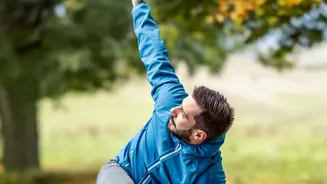
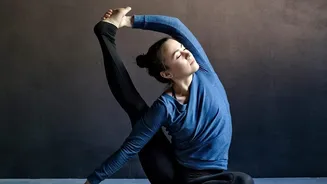
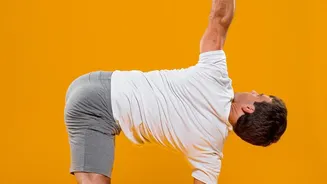
This creates a solid base and protects your lower back. You can either cross your arms over your chest or extend them straight out in front of you at shoulder height. The key is to keep your hips and lower body facing forward as much as possible throughout the entire movement. The rotation should originate from your upper and middle back, not from swinging your arms or hips.
The Inhale to Lengthen, Exhale to Twist Rule
Here is where the magic happens. The partnership between breath and movement in a twist is fundamental. Begin by taking a deep inhale. As you do, focus on lengthening your spine, imagining the crown of your head reaching up towards the ceiling. This action creates space between each vertebra, preparing your spine for safe rotation. Then, as you exhale slowly and steadily, begin to twist your torso to one side. The exhale is your cue to deepen the rotation. Use the full length of the exhalation to gently guide your torso into the twist. When you're ready to return to the centre or switch sides, inhale as you come back to the starting position, again focusing on that sense of lift and length.
The Deeper Benefits of Coordinated Breathing
This specific breathing pattern does more than just guide the movement; it transforms the exercise. When you twist during an exhalation, your abdominal muscles are naturally contracting, which helps to support and protect your spine. This controlled rotation provides a gentle massaging action for your internal organs, like the intestines and kidneys, which can aid in digestion and detoxification by encouraging fresh blood flow. Furthermore, twisting poses can initially make the breath feel short or restricted because they compress the diaphragm. By consciously breathing through this sensation, you train your body to find space and calm even under physical stress, which helps to settle the nervous system and reduce feelings of anxiety.
Finding Stability and Creating Space
A common tendency is to let the hips sway along with the twist, but this diminishes the stretch in the thoracic (mid- to upper) spine, where most of the rotation should occur. To prevent this, actively ground down through your feet and keep your hips anchored forward. Visualise your lower body as a stable, unmoving trunk of a tree, while your upper body is the branch that rotates. The instruction to 'inhale and lengthen' is crucial for creating the physical space needed for the twist. Without that initial lift, the vertebrae can compress, limiting movement and potentially causing discomfort. True rotation comes from a place of length, not force.
Common Mistakes and How to Correct Them
The most frequent error is holding the breath. This creates tension throughout the body and works against the goal of the exercise. Always let your breath flow. Another mistake is using momentum to swing into the twist. This often involves yanking with the arms and shoulders and can place unnecessary strain on the lower back. Instead, move slowly and with control, allowing your core muscles to initiate the rotation. Also, ensure the twist is happening from your torso, not just your neck or arms. Your gaze should follow the direction of your chest to keep your spine in a healthy alignment. Remember, the goal is not maximum rotation but mindful, controlled movement.