




Gather Your Essential Tools
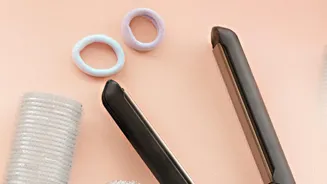
You don't need a professional's entire kit, but a few key items will make all the difference. First, a quality hair dryer with adjustable heat settings and a concentrator nozzle is non-negotiable. The nozzle is crucial for directing airflow precisely
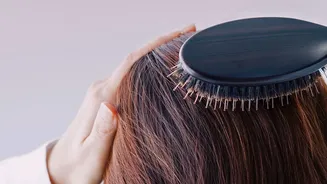
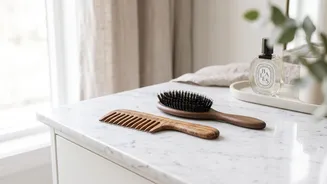
where you need it, preventing frizz and ensuring a smooth finish. Next, you'll need the right brush. For soft volume or that classic curtain bang swoop, a medium round brush (around 1 to 1.5 inches in diameter) is ideal. For a sleeker, straighter look, a paddle brush works well. Finally, always start with a heat protectant spray or cream. This is a vital step to shield your hair from damage, even on lower heat settings.
Prep and Prime for Success
The golden rule of styling bangs is to start immediately after washing, while your hair is still very wet. If you let them air-dry even partially, cowlicks and natural partings will begin to set, making them much harder to control. Towel-blot your hair to remove excess water, but don't wait. Apply your heat protectant evenly from roots to ends. If you use other styling products like mousse or a smoothing cream, use them sparingly on your bangs. Products can build up quickly on the fringe, making it look oily. A good tip is to apply product to the rest of your hair first, then use only what's left on your hands for your bangs.
Mastering the 'Flat Wrap' Technique
Before you even think about creating volume or a curve, you need to neutralize your roots. This is especially important if you have a cowlick. The most effective method is called a 'flat wrap' or 'side-to-side' drying. Using your paddle brush or even just your fingers, blow-dry your bangs first to the right, then to the left, holding the dryer above and pointing the nozzle downward. This back-and-forth motion resets the hair's growth pattern and ensures your bangs lay flat against your forehead without any unwanted separation. Do this until the roots are about 90-100% dry.
Creating Shape with the Right Angles
Now for the artistry. The angle of your brush and dryer determines the final shape. For a classic straight-across bang with a soft bend, place a round brush underneath your bangs at the root. Roll the brush down towards the ends while following with the dryer's nozzle pointed downward. This prevents them from curling under too much. For side-swept bangs, the trick is to dry them in the opposite direction first to create root lift. Then, guide them back to the side they will fall on, using the round brush to create a soft, sweeping motion away from the face. For trendy curtain bangs, wrap each side around the round brush, pulling forward and then rolling back and away from the face to create that signature swoop.
Common Mistakes and Easy Fixes
If your bangs look more like a helmet than a soft fringe, you might be making a few common errors. Using a brush that is too small can create a tight, unflattering 'bubble' curl. Opt for a larger barrel for a softer bend. Another mistake is holding the dryer too close or using a heat setting that's too high, which can lead to stiff, damaged hair. Keep the dryer about eight inches from your hair and use a medium heat setting. If your bangs fall flat by midday, you may need a light spritz of dry shampoo at the roots for texture or a whisper of flexible-hold hairspray to lock in the shape.