

The Land of Painted Havelis
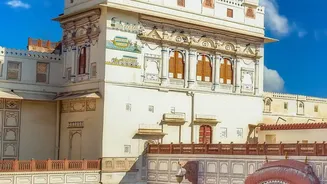
Shekhawati, encompassing districts like Jhunjhunu, Sikar, and Churu, is famed for its magnificent havelis. These mansions, built by wealthy Marwari merchants in the 18th and 19th centuries, are covered in elaborate frescoes depicting everything from mythology
to the arrival of the British. Towns like Mandawa, Fatehpur, and Nawalgarh have long been on the cultural map, yet often treated as a day trip or a brief stop between Jaipur and Bikaner. Many travellers would drive through, admire the art, and move on, partly because infrastructure and accommodation options were limited. The havelis themselves, beautiful but often decaying due to neglect and complex ownership issues, symbolised a glorious past struggling to find its place in the present.
A New State-Backed Vision
Rajasthan's tourism strategy is undergoing a significant shift. In a bid to move beyond the traditional circuit of forts and palaces, the state government is actively promoting emerging destinations, with Shekhawati being a key focus. Announced in the February 2026 budget, a INR 200 crore 'Shekhawati Haveli Conservation Scheme' aims to revitalise the region. This isn't just about a fresh coat of paint; the plan involves façade improvements, developing heritage streetscapes, and improving facilities across more than 660 identified havelis. The goal is to scientifically conserve the priceless frescoes and develop the entire region as a cohesive 'Open Art Gallery,' a vision detailed in the Shekhawati Haveli Conservation Scheme 2026.
Redrawing the Tourist Route
This concerted effort is fundamentally changing the 'case' for visiting Shekhawati. Instead of a loosely connected series of towns, the government is working to develop a formal tourism circuit stringing together key locations like Nawalgarh, Dundlod, Mandawa, Fatehpur, and others. This means better road connectivity between these towns, which has been a past challenge. By creating a structured route, the aim is to encourage longer stays and more in-depth exploration. This move transforms a potential day trip into a multi-day itinerary, allowing visitors to appreciate the subtle differences in art and architecture from one town to the next.
From Sightseeing to Staying
Perhaps the most significant change for travellers is the focus on experiential tourism through more diverse accommodation. To support longer stays, the government is actively working on financial incentives to promote homestays. The Rajasthan Homestay (Paying Guest House) Scheme 2026 has been amended to be more appealing, increasing the number of rooms allowed and removing the requirement for the owner to live on-site, which can be managed by a caretaker instead. This policy shift encourages the conversion of privately owned havelis into boutique hotels and homestays. Incentives, such as relaxed liquor license rules for heritage properties with as few as five rooms, are designed to make conservation economically viable for owners. For the traveller, this means a chance to stay within the frescoed walls, offering a more immersive experience than a roadside hotel ever could.
A Deeper, More Sustainable Journey
The government's push is more than just infrastructure; it's about building a sustainable tourism model. By involving haveli owners and stakeholders, the plan aims to ensure that the economic benefits of tourism reach the local community. Initiatives like heritage walks and the development of cultural centres are planned to complement the visual feast of the havelis. The ultimate ambition, backed by a significant conservation budget, is to secure a UNESCO heritage tag for the region, which would further protect its unique character. This changes the proposition for visitors: a trip to Shekhawati is no longer just about seeing art on walls, but about participating in the preservation of a living heritage, engaging with local communities, and supporting a region in the midst of a proud revival.