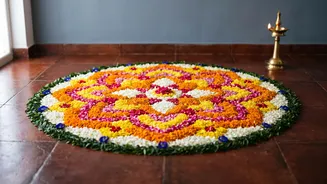







Embrace High-Contrast Colours
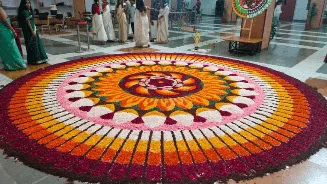
One of the most effective ways to make a design pop is through the strategic use of colour. Instead of blending similar shades, opt for high-contrast combinations. Placing a ring of bright yellow marigolds next to deep red rose petals, or a sharp white
circle of jasmine against orange, creates visual drama. This stark difference between colours makes the edges of each layer appear sharper and more defined, giving the entire Pookalam a crisp, deliberate, and more complex look, even if the pattern itself is simple.
Focus on a Detailed Centrepiece
Draw the eye inward by creating a small but highly detailed central motif. This could be a tiny, intricate spiral, a beautifully arranged lotus bud, or a single large, perfect flower. By making the centre the most complex part of the design, you create a powerful focal point. The rest of the Pookalam can then be simpler, with concentric circles or basic petals radiating outwards. The viewer's attention will be captured by the intricate core, making the entire arrangement feel more sophisticated and grander than its actual size.
Add Dimension with Raised Elements
An elaborate look isn't just about width; it's also about height. Adding a third dimension can instantly elevate a small Pookalam. Place a traditional brass nilavilakku (lamp) or a decorative diya in the middle to create a shimmering, elevated centrepiece. Another simple trick is to build a small mound of petals at the centre, creating a gentle dome. This play on height breaks the flatness of the design and adds a sense of depth and structure, making it appear more substantial and thoughtfully constructed.
Define with Strong Outlines
Clear, sharp outlines are crucial for making a design look polished and complex. Use a thin, dark line of deep green leaves or a bright, clean line of white rice flour or tiny white petals to frame each coloured section of your Pookalam. This technique works like a sketch artist's ink pen, defining the shapes and separating the colours cleanly. This prevents the colours from visually bleeding into one another and gives your geometric patterns or floral shapes a professional, well-defined finish that looks incredibly intricate.
Play with Layers and Textures
Combining different textures adds a rich, tactile quality to your Pookalam. Mix finely shredded marigold petals with the larger, smoother surfaces of rose petals. Incorporate the unique shapes of hibiscus or the delicate nature of jasmine. You can even add a ring of green leaves to introduce a completely different texture and colour. This variation stops the design from looking flat. Each layer offers a new texture for the eye to appreciate, creating a sense of complexity and richness that goes beyond simple colour blocking.
Use Intricate Geometric Patterns
Instead of relying solely on simple circles, incorporate more complex geometric shapes. Even in a small space, you can create a pattern of interlocking triangles, squares, or a starburst design. Mandala-inspired patterns, with their repeating symmetrical motifs, are particularly effective. Start with a central point and build outwards with repeating geometric shapes. This structured approach gives the Pookalam a modern and dynamic feel, making it appear more complex and meticulously planned. The symmetry and repetition create a hypnotic effect that feels grand.
Create Movement with Spirals
Spiral patterns are a fantastic way to create a sense of movement and visual interest in a compact design. A spiral naturally draws the eye from the centre outwards or vice versa, making the Pookalam feel dynamic and more expansive than it is. You can create a simple spiral with a single line of flowers, or a more complex one with multiple intertwining bands of different colours. This curving, flowing design feels less static than simple circles and creates an optical illusion of depth and detail with minimal effort.