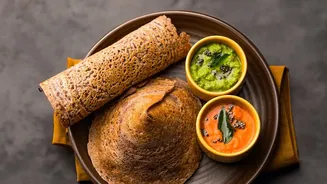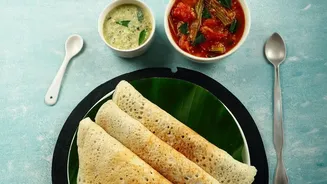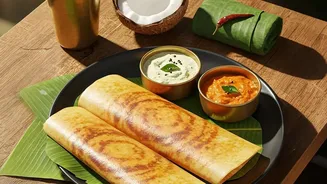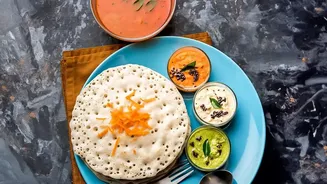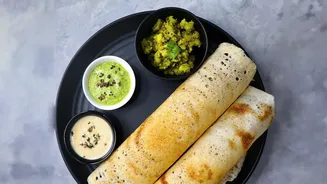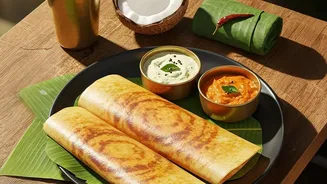

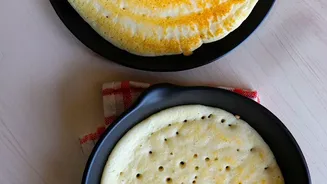
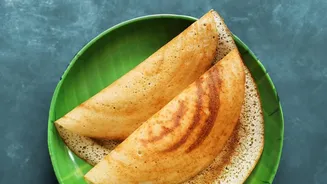
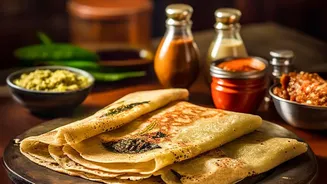
The dream: a golden, paper-thin dosa that shatters at the touch. The reality: a torn, sticky mess. The secret to restaurant-style perfection lies in your cast-iron tawa, but the advice to 'use oil sparingly' can be misleading. Let's unravel it.
Why Cast Iron Is King for Dosas
Before
we talk about oil, let's appreciate the tawa itself. Unlike lighter pans, cast iron is brilliant at retaining and distributing heat evenly. This means no frustrating hot spots where the dosa burns while other parts remain undercooked. Its heavy base maintains a stable temperature even when you pour on cool batter, which is crucial for that initial sizzle that creates a crisp base. Over time, cast iron develops a natural non-stick surface that improves with every use, giving you that smooth release without synthetic coatings.
The Science of a Non-Stick Surface
The magic of a cast-iron tawa lies in its 'seasoning'. This isn't about flavour; it's a scientific process called polymerization. When you apply a thin layer of oil to the pan and heat it past its smoke point, the oil molecules break down and bond directly with the iron. This chemical reaction creates a hard, slick, protective coating that fills in the microscopic pores of the metal. This new surface is what makes the tawa naturally non-stick and rust-resistant. It’s not a layer of grease; it’s a transformed, baked-on surface that becomes part of the pan.
The Great Oil Debate: Sparingly or Sufficiently?
Here’s the core issue: 'sparingly' is relative. A brand-new or poorly seasoned tawa has no protective layer, causing the batter to bond directly with the metal and stick. In this case, even a generous amount of oil might not save your dosa. However, on a perfectly seasoned tawa, you need only a whisper of oil—a thin film—to achieve a crispy, golden dosa. The phrase 'use oil sparingly' assumes your pan is already in prime condition. The goal isn't to cook without oil, but to rely on a well-built seasoning layer, which itself is made of oil. For each dosa, a few drops spread evenly are usually sufficient to help with browning and release. Some cooks even suggest that for those watching oil intake, wiping the pan with a lightly oiled cloth between dosas is enough.
Temperature Is Everything
More than the amount of oil, the temperature of your tawa will make or break your dosa. If the tawa is too cool, the batter won't sizzle on contact; it will sit, soak, and stick. If it's screaming hot, the batter will seize and cook instantly, making it impossible to spread thin. The ideal temperature is medium_hot. The classic test is to sprinkle a few drops of water on the surface. If they sizzle and evaporate within seconds, you're ready. If they disappear instantly with a sharp crackle, it's too hot; let it cool for a moment. Some chefs recommend lowering the heat just before pouring the batter and then increasing it again to cook.
Your Pre_Dosa Ritual for Success
To guarantee success, adopt a simple ritual. Once your tawa is at the right temperature, add a few drops of oil. Then, take half an onion, pierce it with a fork, and rub it all over the tawa's surface. This not only distributes the oil evenly but also helps clean the surface and imparts a subtle flavour. If you don't use onions, the stalk of a brinjal or a piece of potato works too. Wipe away any excess oil with a cloth. Your tawa is now perfectly primed. Pour the batter in the centre and spread it in quick, concentric circles. Drizzle a little more oil or ghee around the edges to help them crisp up and lift easily. Don't try to flip it until the edges begin to turn golden and lift on their own.