


A Seed and a Legume
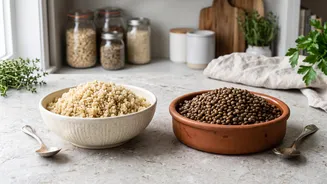
At first glance, quinoa and lentils might seem interchangeable as healthy bases for meals, but they come from different botanical families. Quinoa is technically a seed from the 'Chenopodium quinoa' plant, a relative of spinach and beets. It is often
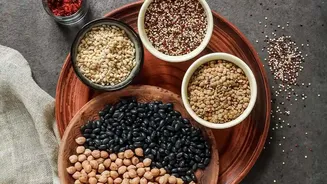
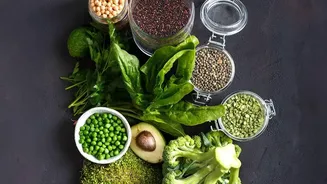
called a pseudocereal because it's cooked and eaten like a grain and has a similar nutritional profile. Lentils, on the other hand, are pulses—the edible seeds of a legume plant. They are part of the same family as beans, chickpeas, and peas. This fundamental difference is the source of their distinct nutritional and culinary characteristics.
Nutritional Showdown
Both quinoa and lentils are nutritional powerhouses, but they excel in different areas. A cup of cooked lentils provides a mighty 18 grams of protein and about 16 grams of fiber, making it incredibly filling and great for digestive health. It's also an exceptional source of folate and iron, two nutrients crucial for energy production and cell health. In comparison, a cup of cooked quinoa offers about 8 grams of protein and 5 grams of fiber. However, quinoa shines in its mineral content, providing more magnesium, manganese, and phosphorus than many other grains.
The Complete Protein Question
One of quinoa's biggest claims to fame is that it's a 'complete protein', meaning it contains all nine essential amino acids that the body cannot produce on its own. This makes it a rarity in the plant kingdom and an excellent protein source, particularly for vegetarians and vegans. The key amino acid it contains is lysine, which is often lacking in cereal grains. Lentils contain significant amounts of protein but are slightly low in two essential amino acids, methionine and cysteine. However, this is easily remedied by pairing lentils with a whole grain like rice or bread, a combination common in many cuisines that creates a complete protein profile.
In the Kitchen: Texture and Taste
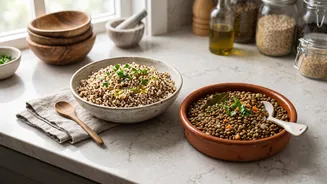
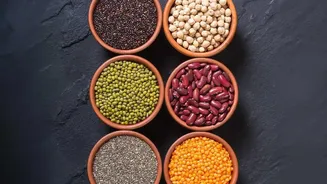
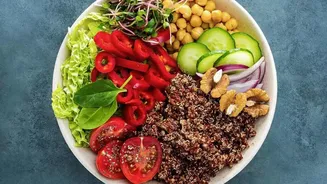
Culinary use is where quinoa and lentils truly diverge. Quinoa has a mild, nutty flavor and a fluffy yet slightly chewy texture when cooked. This makes it a versatile substitute for rice or couscous in salads, grain bowls, and as a side dish. It can even be used in breakfast porridges or baked goods. Lentils have a richer, earthier flavor. Their texture depends on the variety; brown and green lentils tend to hold their shape well, making them perfect for salads and stews, while red and yellow lentils break down into a creamy, soft consistency, ideal for thick soups, curries, and dips.
Preparation and Cooking Time
When it comes to preparation, both are relatively quick, but there are differences. Quinoa must be rinsed thoroughly before cooking to remove saponins, a natural coating that can taste bitter or soapy. After rinsing, it typically cooks in about 15 minutes. Most lentils do not require pre-soaking and cook in 20-30 minutes, depending on the type. Red lentils cook the fastest, often in just 15-20 minutes, while green lentils take a bit longer. This makes both options convenient for weeknight meals.
Potential Downsides to Consider
While overwhelmingly healthy, both foods have minor considerations. The saponins on quinoa can cause digestive irritation if not washed off, though this is rare with commercially sold, pre-washed quinoa. Lentils contain 'anti-nutrients' like phytic acid and lectins, which can slightly reduce the absorption of minerals like iron and zinc and may cause digestive issues in sensitive individuals if consumed raw or undercooked. However, cooking, soaking, or sprouting lentils significantly reduces these compounds, making their nutrients more available and easier to digest.