



The Challenge With Current EV Batteries
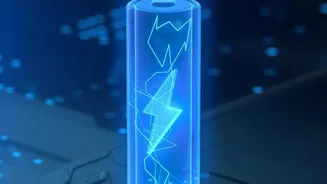
At the heart of nearly every electric vehicle is a lithium-ion battery. While powerful, these batteries rely on a liquid electrolyte to function—a chemical soup that allows energy to move back and forth. The problem is that these conventional electrolytes
are often flammable. In the event of a crash, manufacturing defect, or overheating, this liquid can ignite, leading to intense fires that are notoriously difficult to extinguish. This safety concern remains a significant hurdle for the industry, prompting a global search for a safer alternative that doesn't compromise performance.
A Solution From An Unlikely Source
Instead of looking to complex synthetic chemistry, researchers are turning to nature. Multiple initiatives have demonstrated the potential to create stable, non-flammable electrolytes from agricultural byproducts. For example, an Indian startup named Nexus Power is creating batteries from crop residue like paddy straw. The core idea involves taking cellulose—the structural component of plants—from waste materials and processing it into a gel. This plant-based gel can replace the flammable liquid electrolyte currently used in lithium-ion batteries. This approach tackles two problems at once: it finds a valuable use for agricultural waste that is often burned, contributing to air pollution, and it creates a fundamentally safer battery.
How Does It Work?
The science behind the innovation is both elegant and effective. Researchers extract nanofibers from agricultural waste. These natural fibers are then used to create a bio-based polymer gel. This gel acts as a solid-state or quasi-solid electrolyte, a material that allows ions to pass through it but is not a volatile liquid. The key advantage is its inherent thermal stability. Unlike liquid organic solvents, this plant-based gel is non-flammable, drastically reducing the risk of thermal runaway—the chain reaction that leads to battery fires. Furthermore, because the primary ingredient is plant matter, the resulting electrolyte is biodegradable, offering a much greener end-of-life cycle compared to today's toxic and difficult-to-recycle batteries.
More Than Just a Safety Upgrade
The benefits extend far beyond fire prevention. Using agricultural waste as a raw material creates a circular economy. In India, where startups like Indi Energy and Nexus Power are pioneering this technology, it offers a solution for the massive amounts of crop residue generated annually. This could provide farmers with a new revenue stream and reduce the harmful practice of stubble burning. From a manufacturing standpoint, these bio-based materials are abundant and domestically available, which could reduce reliance on imported and often scarce raw materials like lithium, cobalt, and nickel, potentially lowering the overall cost of EV batteries. Some research suggests these batteries could have performance on par with existing technologies in terms of energy density and recharge capabilities.
The Road to Commercialisation
While the technology is incredibly promising, it is still in the early stages of development and scaling. Researchers and startups are working to refine the manufacturing processes and ensure the long-term durability and performance of these bio-batteries meet the rigorous demands of the automotive industry. Challenges include achieving the same level of ionic conductivity as traditional electrolytes to ensure rapid charging and consistent power delivery. However, the progress is rapid. Several companies have moved from lab experiments to pilot plants, securing patents and government grants to accelerate their path to market. The initial focus for many is on applications like electric two-wheelers, three-wheelers, and stationary energy storage systems, which can serve as a stepping stone to the broader passenger EV market.