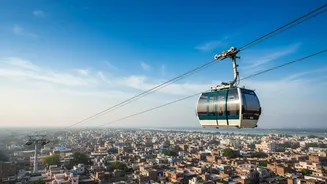



The Journey After the Journey
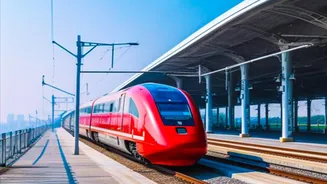
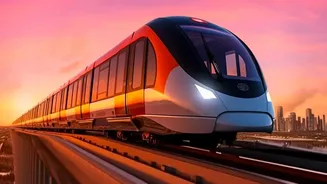
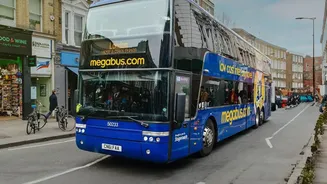
We've all been there. You book an intercity train or bus, perhaps a modern Vande Bharat or a comfortable Volvo, and enjoy a smooth ride between cities. But the moment you step into the arrival terminal, a different kind of journey begins. This is the world
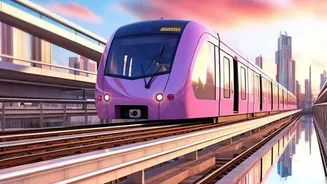
of the 'first mile' and 'last mile'—the critical, often frustrating, segments of travel that connect you from your starting point to the main transport hub, and from your destination hub to your final stop. This portion of the trip, while physically short, can account for a disproportionate amount of the total travel time, cost, and stress. A study on the Delhi Metro found that poor last-mile connectivity was a major reason for ridership being below 50 percent of projections, highlighting how crucial this link is. The dream of seamless travel often dies in the face of haggling with auto-rickshaw drivers, searching for a functioning ride-hailing kiosk, or discovering the nearest metro station is an unsafe 20-minute walk away.
The Hidden Costs of a Broken Link
Poor last-mile connectivity isn't just an inconvenience; it carries tangible costs. For many commuters, the expense of reaching a metro or train station can exceed the fare for the main journey itself. This financial burden disproportionately affects those who rely on public transport to be an affordable alternative. Beyond money, there's the cost of time and safety. The uncertainty of finding a reliable ride can add significant delays, while poorly lit or deserted routes to and from transport hubs create safety risks, particularly for women and elderly travellers. This gap in the system pushes many who could use public transit back toward private vehicles, worsening the very traffic congestion that mass transit is meant to alleviate. The growth of private vehicles in India has long outpaced the growth of public transport, and a key reason is this failure to provide a complete, door-to-door solution.
A Patchwork of Inconsistent Solutions
Cities across India are trying to plug this gap, but the results are often a mixed bag. Feeder buses, which are meant to shuttle passengers to and from metro and train stations, are a common solution, but often struggle with low ridership, high operational costs, and poor frequency. In Bengaluru and Chennai, feeder services have been criticised for being unreliable or financially unviable. E-rickshaws have emerged as a popular, low-cost alternative in many cities, effectively solving the connectivity problem for millions. However, their rise has been chaotic, often marked by a disregard for traffic rules and safety, which can add to urban congestion. Meanwhile, ride-hailing apps, once seen as a panacea, present their own challenges with surge pricing, frequent cancellations, and patchy availability at peak times, leaving travellers stranded.
Imagining a Truly Seamless Future
The ultimate goal is an integrated, multi-modal transport system where a traveller can plan, book, and pay for their entire journey—from their front door to their final destination—through a single platform. This concept, known as Mobility-as-a-Service (MaaS), is gaining traction globally and in India. Imagine using one app to book a journey that combines a short e-scooter ride to a metro station, a train to another city, and a pre-booked electric auto waiting to take you to your hotel. Government initiatives like the PM Gati Shakti National Master Plan are aimed at creating the backbone for such integrated networks by planning road, rail, and waterway projects in coordination. The success of these large-scale infrastructure projects, however, will be measured by the everyday commuter's experience. Until the main voyage and its crucial first and last-mile links are seamlessly connected, shared intercity travel will always feel like an incomplete journey.