
The Building Blocks: What Are Amino Acids?
At its core, protein is made up of smaller units called amino acids. Think of them as individual beads on a string. Our bodies use about 20 different amino acids to build and repair tissues, create enzymes, and support countless other functions. Of these,
nine are called 'essential' amino acids. The term 'essential' means our bodies cannot produce them on their own, so we must get them from the food we eat. These nine are histidine, isoleucine, leucine, lysine, methionine, phenylalanine, threonine, tryptophan, and valine.
Complete vs. Incomplete: The Protein Divide
A food source is called a 'complete protein' when it contains all nine essential amino acids in adequate amounts. Animal-based foods like meat, fish, eggs, and dairy are classic examples of complete proteins. On the other hand, 'incomplete proteins' are missing or are low in one or more of these essential amino acids. Most plant-based foods, such as legumes, grains, nuts, and seeds, fall into this category. However, there are a few exceptions. Soy products (like tofu and edamame), quinoa, and buckwheat are plant-based foods that are considered complete proteins on their own.
How Is Protein Quality Measured?
Scientists use scoring systems to evaluate a protein's quality based on its amino acid profile and how easily it can be digested. One of the most established methods is the Protein Digestibility Corrected Amino Acid Score (PDCAAS). It rates proteins on a scale from 0 to 1.0, with 1.0 being the highest quality, indicating the protein provides all essential amino acids and is highly digestible. A newer, more precise method is the Digestible Indispensable Amino Acid Score (DIAAS), which measures the absorption of individual amino acids. While DIAAS is gaining traction in scientific circles, PDCAAS is still a widely used standard. These scores help explain why a single plant source might not be enough on its own.
The Smart Solution: Protein Complementation
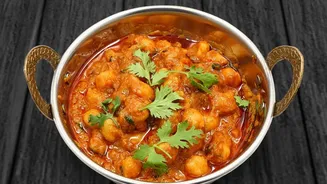
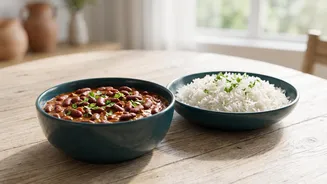
This is where the magic of food pairing, or 'protein complementation', comes in. By combining two or more incomplete proteins, you can create a meal that provides all nine essential amino acids. The key is that different plant foods have different limiting amino acids. For instance, grains like rice and wheat are typically low in the amino acid lysine but contain sufficient amounts of methionine. Conversely, legumes like lentils (dal) and beans (rajma, chana) are rich in lysine but low in methionine. When you eat them together, they fill in each other's nutritional gaps. This is a principle that has been intuitively practiced in Indian cuisine for generations through classic dishes like dal and rice, rajma chawal, roti with dal, and khichdi.
Do Pairings Have to Be in the Same Meal?
This is a common question, and the answer, according to modern nutrition science, is no. The idea that you must eat complementary proteins in the exact same meal is an outdated concept from the 1970s. Research now shows that the body maintains a 'pool' of amino acids throughout the day. As long as you consume a varied diet that includes different types of plant proteins—grains, legumes, nuts, and seeds—over the course of the day, your body can pull the necessary amino acids as needed to form complete proteins. So, if you have dal for lunch and roti for dinner, you're still getting the benefits of protein complementation.