


A Glimpse into the Cosmic Dawn
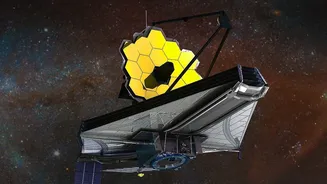
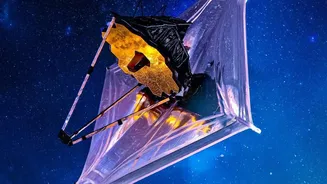
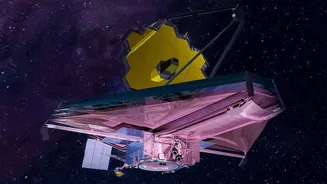
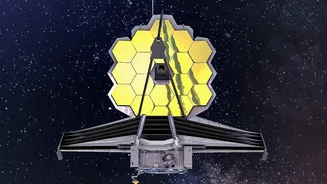
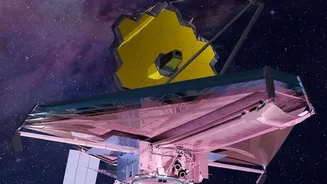
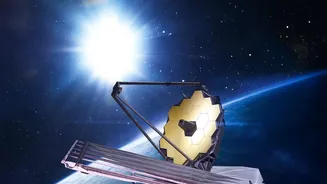
Astronomers using the James Webb Space Telescope (JWST), with help from the Gemini North telescope in Hawai'i, have identified the oldest and most distant compact pair of quasars ever seen. The system, designated J1602+4228AB and given the Hawaiian nickname
Nāpōwawāʻenakaulua, is observed as it was just 900 million years after the Big Bang. At this stage, known as 'cosmic dawn', the universe was less than a tenth of its current age, and the very first stars and galaxies were just beginning to form. To find not one, but two supermassive black holes in such close proximity, so early in cosmic history, presents a profound puzzle for astrophysicists. Current models of the universe simply don't account for objects this massive forming so quickly.
What Exactly is a Quasar?
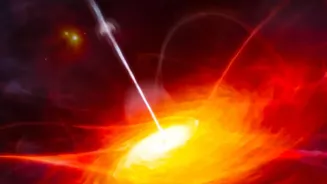
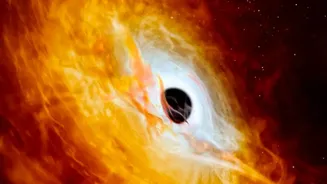
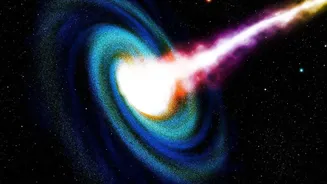
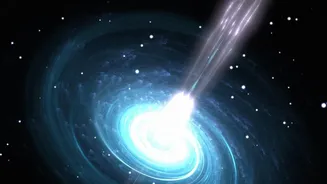
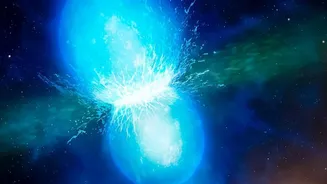
A quasar, short for 'quasi-stellar object', isn't the black hole itself, but the intensely luminous spectacle created by one. At the center of some galaxies, a supermassive black hole—with a mass millions or billions of times that of our sun—can actively pull in enormous amounts of gas and dust. As this material spirals inward, immense gravitational and frictional forces heat it to extreme temperatures, causing it to glow with a brilliance that can outshine all the stars in its host galaxy combined. This makes quasars some of the brightest and most distant objects we can observe, providing a unique window into the conditions of the early universe.
The Significance of a Pair
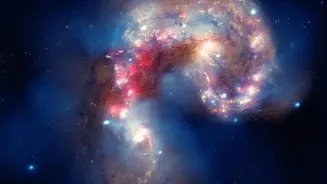
Finding a single quasar from the cosmic dawn is a significant achievement. Finding a pair is revolutionary. The two black holes in Nāpōwawāʻenakaulua are colossal; one weighs in at 1.5 billion times the mass of the sun, while its companion is about 400 million solar masses. They are separated by only 18,100 light-years, which is a relatively small distance on a cosmic scale—roughly one-fifth the diameter of our own Milky Way galaxy. Theories suggest that such dual-quasar systems form when two galaxies collide and merge. This discovery provides the strongest evidence yet that these massive galactic mergers were happening much earlier and more frequently than previously thought, serving as a key driver for accelerated growth in the infant universe.
Rewriting the Rules of Black Hole Growth
For decades, a major question in cosmology has been how supermassive black holes grew so big, so fast. Standard theories propose a gradual growth through the slow accretion of matter or mergers over billions of years. However, the existence of Nāpōwawāʻenakaulua and other early giants found by JWST contradicts this timeline. As lead researcher Silvia Onorato noted, there is no definitive theoretical explanation for how even one such giant quasar could exist so early, let alone two. The presence of this pair suggests that the process is far more rapid. The most likely explanation is that these black holes are located in an unusually dense node of the cosmic web, where galaxy interactions and the availability of gas to fuel the black holes were extreme.
A Laboratory for the Early Universe
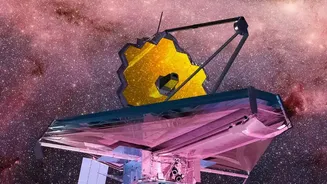
While this discovery breaks existing models, it also provides an invaluable opportunity. Nāpōwawāʻenakaulua acts as a natural laboratory for studying how the very first massive galaxies and their central black holes assembled. The system was first identified in data from the Aether survey, a JWST program that has compiled a census of 200 quasars from this early era. Follow-up observations were crucial; the high-resolution infrared imaging of JWST, combined with data from Gemini North, allowed astronomers to confirm they were looking at two distinct objects and not a single quasar whose light was bent into two images by a gravitational lens. Scientists now plan further studies to analyze the gas and chemical compositions surrounding the pair, hoping to unlock more secrets about this period of furious cosmic construction.