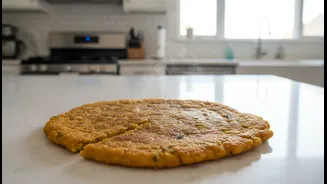




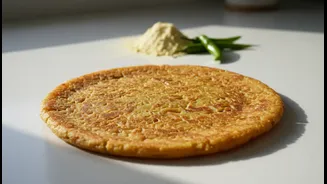



Start with Fresh, Sifted Flour
The foundation of any great chilla is the quality of your gram flour (besan). Always use fresh besan; old flour can taste bitter and will affect the final texture. If the flour has been sitting in your pantry, it's prone to developing lumps. To guarantee
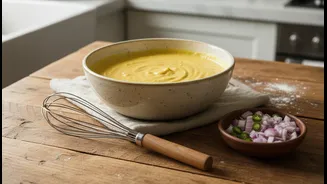
a silky-smooth batter, take the extra minute to sift the besan before you add any liquid. This simple step is non-negotiable for preventing those stubborn lumps that are impossible to whisk away later, ensuring your batter is uniform from the start.
Master the Batter Consistency
The most critical step is achieving the right batter consistency. It should be smooth and have a flowing, pourable consistency—similar to a standard pancake batter, but not too thick or too runny. A batter that is too thick will result in a dense, chewy chilla that doesn’t spread easily. If it's too thin, it will lack structure and likely break or tear in the pan. The golden rule is to add water gradually. Start by adding about half the amount of water to your besan (e.g., half a cup of water for one cup of besan) and whisk thoroughly to form a smooth paste. Then, continue to add water little by little until you reach the desired consistency.
The Power of a Patient Rest
Once your batter is perfectly mixed, do not rush to the stove. Allowing the batter to rest for at least 15-20 minutes is a game-changer. This resting period allows the besan to fully hydrate, absorbing the water and swelling. This process not only helps the flavours of the spices to meld but also results in a softer, more tender chilla. Some sources suggest this also aids in easier digestion. While some suggest you can rest it overnight in the fridge, a short rest on the counter is sufficient to significantly improve the texture. If you do refrigerate it, remember the batter will thicken, so you may need to add a splash of water before cooking.
Incorporate Add-ins Thoughtfully
Vegetables and spices make chillas delicious, but their addition requires care. Always chop your vegetables, like onions, tomatoes, and coriander, as finely as possible. Large, chunky pieces can create weak points in the chilla, causing it to break when you try to flip it. It's also wise to consider the water content of your vegetables. Tomatoes, for example, will release moisture and can thin out your batter. If using many vegetables, you may need slightly less water initially. Spices like ajwain (carom seeds) and ginger not only add flavour but are also traditionally used to aid digestion.
Consider a Binding Agent for Crispiness
If you struggle with chillas that are too soft or tend to break, a simple trick is to add a binding agent. Just a tablespoon of sooji (semolina/rava) or rice flour mixed into the batter can make a world of difference. These ingredients help bind the batter more effectively and contribute to a crispier texture, providing more structure and making the chilla easier to handle in the pan. For an extra fluffy, omelette-like texture, a tiny pinch of baking soda can be added just before you start cooking, but this is optional and not part of the traditional method.