





Understanding ‘Tech Neck’
That persistent ache at the back of your neck has a name: 'tech neck'. It's the result of prolonged hours spent leaning forward to look at screens. This posture puts significant strain on your cervical spine; for every few degrees your head tilts forward,
the load on your neck muscles increases substantially. Over time, this leads to stiffness, tension headaches, and upper back pain. The key to countering this is not just stretching, but also re-introducing movement and reversing the constant forward hunch. Ergonomic chair yoga offers a gentle and effective way to do this right at your workspace.
Seated Cat-Cow
This gentle spinal movement is perfect for waking up a stiff back and neck. Sit at the edge of your chair with your feet flat on the floor and hands on your knees. As you inhale, arch your back, lift your chest, and look slightly upward, creating a 'cow' pose. As you exhale, round your spine, tuck your chin to your chest, and let your shoulders curve forward into a 'cat' pose. Repeat this fluid movement for 5-8 breaths. It helps mobilize the entire spine, relieving the pressure that builds up from static sitting.
Gentle Neck Rolls and Tilts
To specifically target neck tension, start by sitting tall and dropping your shoulders away from your ears. Slowly lower your chin towards your chest and hold for a few breaths. Then, gently roll your right ear toward your right shoulder, pausing to feel the stretch along the left side of your neck. Avoid forcing the movement. Return to the center and repeat on the left side. You can complete the movement by performing slow, full neck rolls, but only if it feels comfortable and causes no pain. This simple exercise improves flexibility and boosts blood flow.
Upper Trapezius Stretch
The upper trapezius muscles, which run from your neck to your shoulders, are notorious for holding tension. To stretch them, sit tall and grab the side of your chair with your right hand to anchor your shoulder down. Gently tilt your head to the left, bringing your left ear toward your left shoulder. For a deeper stretch, you can place your left hand on the side of your head and apply very light pressure. Hold for 20-30 seconds, breathing deeply, and then switch sides. This directly addresses the stiffness caused by poor desk posture.
Seated Eagle Arms
This pose is a fantastic way to release tension between the shoulder blades. Extend your arms forward, parallel to the floor. Cross your right arm over your left, then bend your elbows. Try to bring your palms to touch; if this is too intense, simply press the backs of your hands together. Lift your elbows slightly and feel the stretch across your upper back. Hold for 5 deep breaths, then unwind and repeat with the left arm over the right. This movement helps improve shoulder blade mobility, an area that often becomes rigid from desk work.
Chest Opener
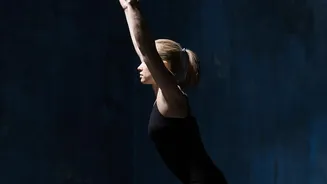
To counteract the forward slump of desk work, you need to open the chest. Sit tall and interlace your fingers behind your back. If you can't clasp your hands, hold a scarf or a belt. Squeeze your shoulder blades together, straighten your arms, and lift your chest towards the ceiling. This pose stretches the pectoral muscles and the front of the shoulders, which become shortened and tight from rounding forward. Hold for 15-30 seconds while breathing deeply into your expanded chest. This is a perfect counter-pose to a long session of typing.