





What Exactly Is Microgravity?
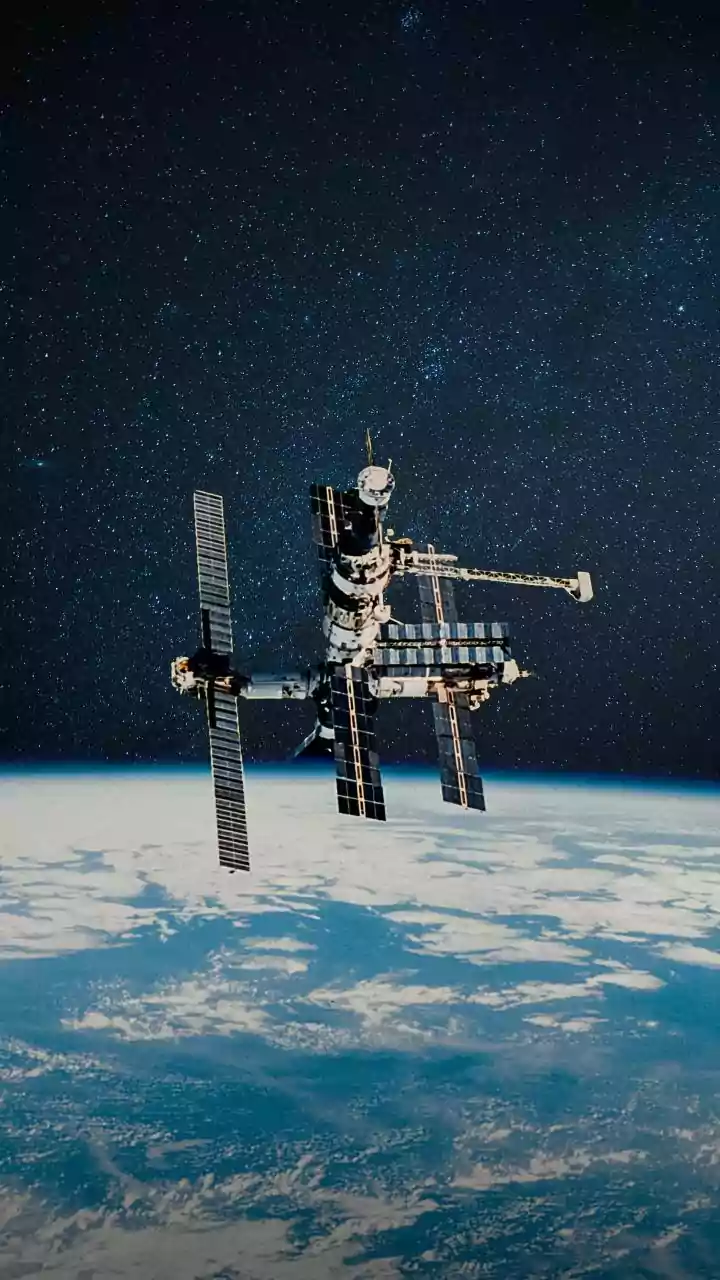
First, let's clear up a common misconception. Microgravity is not the complete absence of gravity. In low Earth orbit, where the International Space Station (ISS) and other spacecraft fly, Earth's gravity is still about 90% as strong as it is on the surface.
So why do things float? The answer is freefall. An orbiting spacecraft is continuously falling toward Earth, but it's also moving sideways at such a high speed—about 28,000 kilometres per hour—that it constantly misses the planet. The spacecraft and everything inside it are falling together, creating a state of apparent weightlessness. The term 'microgravity' is used because tiny disturbances, from astronauts moving around to the spacecraft's own mechanical vibrations, mean the environment isn't perfectly 'zero-g'.
Why Is This Environment So Special for Science?
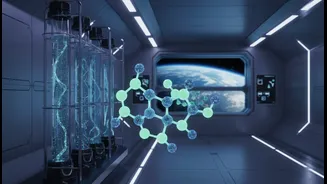
On Earth, gravity dominates everything. It causes sedimentation, where denser particles settle at the bottom, and convection, where warmer, less-dense fluids rise. These forces often mask more subtle physical phenomena. In microgravity, these dominant effects are virtually eliminated. This allows scientists to observe processes like diffusion and surface tension in their purest forms. For biologists, it means cells can grow into three-dimensional structures that more closely resemble tissues in the human body, which is difficult to achieve on Earth. For materials scientists, it’s a chance to create perfectly uniform metal alloys or grow flawless crystals for use in electronics and medicine. Essentially, removing gravity from the equation creates a pristine laboratory for discovery.
ISRO’s Ambitions in the Microgravity Arena
ISRO has identified microgravity research as a key pillar of its future ambitions, especially with the Gaganyaan human spaceflight programme on the horizon. The agency plans to launch a crew of three into a 400 km orbit, providing a platform for Indian scientists to conduct a range of experiments. ISRO has already been inviting proposals from the national scientific community for experiments in fields like materials science, space biology, pharmacology, and fluid physics. Recent workshops have emphasised creating a self-sustaining microgravity research ecosystem in India. This involves collaborations with academia and industry to develop experiments for upcoming missions, including a potential flight of an Indian astronaut to the ISS and, in the longer term, the planned Bharatiya Antariksh Station.
From Space Labs to Life on Earth
The research conducted in orbit has tangible benefits back on the ground. For instance, growing higher-quality protein crystals in microgravity can help scientists design more effective drugs to fight diseases. Studying how the human body adapts to space—such as muscle atrophy and bone density loss—provides invaluable insights into similar conditions on Earth, like osteoporosis and muscular dystrophy. Experiments on combustion could lead to more efficient fuel consumption and better fire safety standards. ISRO's focus includes studying edible microalgae as a potential food source for long missions and understanding how tardigrades, tiny resilient creatures, survive extreme conditions—knowledge with potential therapeutic applications on Earth. In essence, what is learned in space helps improve life on Earth.
The Next Frontier for Indian Science
Mastering microgravity research is not just about scientific curiosity; it's a strategic capability. As India advances its human spaceflight programme, the ability to conduct sophisticated experiments in orbit is crucial for long-duration missions and the health of its astronauts. It also positions India as a major player in the global space economy. The Indian Space Policy 2023 clearly outlines the goal of transitioning ISRO's focus towards R&D and exploration, empowering private entities and research institutions to contribute. By fostering a robust microgravity research ecosystem, ISRO is not only pushing the boundaries of knowledge but also inspiring a new generation of scientists and engineers, securing India’s place as a leading space-faring nation for decades to come.