






What Did OpenAI Announce?
On November 12, 2026, OpenAI launched API inference residency in India. This means that for eligible customers, the entire process of running AI tasks—from the initial request to the final computed answer—can now happen on servers located within India. This new
capability supports the company's latest flagship model, GPT-6 Luna, through its Chat Completions and Responses APIs. Previously, while some data could be stored in India, the actual computational work, known as 'inference', was often sent to servers abroad. This launch closes that loop, ensuring that both data storage and processing can be handled domestically, a crucial requirement for many Indian businesses. The move is part of the broader 'OpenAI for India' initiative, which includes a partnership with Tata Group to build local AI-ready data centers.
What 'Local Inference' Actually Means
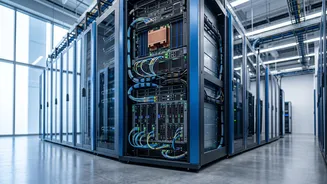
So, what is 'local inference'? Think of it as the difference between streaming a movie and playing a video file you've already downloaded. 'Inference' is the process of using a pre-trained AI model to generate a response, like summarizing text or answering a question. Cloud-based inference sends your data over the internet to a company's data center for processing. Local inference, in this context, means the model runs on hardware physically located within your country's borders. Your data doesn't have to make a round-trip journey to another continent. This dramatically reduces latency (the delay in getting a response) and gives companies much greater control over their information. For businesses handling sensitive customer data, proprietary code, or financial records, this is not just a nice-to-have; it's a fundamental requirement.
The Sovereignty and Speed Advantage
This announcement is a direct answer to the growing demand for data sovereignty in India. Many companies, especially in regulated sectors like finance and healthcare, have been hesitant to fully adopt AI because of rules requiring sensitive data to stay within the country. Data residency (storing data locally) was a good first step, but true sovereignty means also controlling where that data is processed. By enabling local inference, OpenAI removes a major barrier to adoption for these industries. Beyond compliance, there's a significant performance boost. Eliminating international network round-trips means faster, more responsive AI applications, which is critical for real-time customer service bots, interactive tools, and other latency-sensitive tasks.
A Glimpse at GPT-6 Luna's Power
While the local API is the big news for India, the model powering it, GPT-6 Luna, represents a major leap in AI capability. Though full details are emerging, models in the GPT-6 generation are understood to be a significant evolution from their predecessors. They are built on Mixture-of-Experts (MoE) architectures with trillions of parameters, making them far more powerful and efficient. Key advancements expected from this generation include vastly larger context windows—reportedly up to 2 million tokens—allowing the AI to process and recall information from enormous documents or entire codebases. They also feature improved 'agent' capabilities, meaning the AI can independently plan and execute multi-step tasks across different applications. For developers and businesses in India, this means having access to a tool capable of not just assisting with tasks, but automating complex workflows from start to finish.
Who Benefits and What's Next?
The immediate beneficiaries are Indian developers, startups, and large enterprises in regulated fields. System integrators and tech service providers now have a powerful, compliant tool to build new AI-driven applications for clients who previously could not use cloud-based AI. According to Nitin Bawankule, OpenAI's Head of Enterprise in India, this move gives businesses more control and helps them put the company's most powerful tools to work. The launch also strengthens India's domestic AI ecosystem, aligning with national priorities to build sovereign digital infrastructure. The next step will be watching how the Indian market leverages this newfound capability. Expect to see a wave of innovation in fintech, healthcare, and public sector applications, as developers begin to build on a platform that is not only powerful but also meets the country's unique data governance needs.